




Overview
- The holiday season (October–December) is the golden quarter for e-commerce, driving record-breaking sales across Black Friday, Cyber Monday, Christmas, and regional shopping events.
- Success hinges on early planning—locking budgets, analyzing past sales, forecasting demand, and securing multiple suppliers.
- Even with perfect planning, cash runs out faster than payouts arrive. That is where a credit line makes the difference—keeping bestsellers in stock, ad campaigns running, and operations smooth when it matters most.
- With CrediLinq, sellers get quick approvals, predictable fees, and flexible access to funds that move at the speed of holiday sales.
Why This Matters to You
- Holiday peak season does not wait
If you are not ready by November, you will likely miss your biggest sales opportunity of the year. - Cash gaps kill growth
Sales can skyrocket, but without upfront liquidity, you cannot stock or market enough to keep up. - Smarter planning = higher margins
From bulk buying to automation, prepping early directly improves profitability.
The year-end holiday shopping season is your largest sales window. Forrester’s Predictions 2025 report forecasted total retail sales of $24.9 trillion.
Yet, many e-commerce businesses lose out during the golden quarter because of weak planning, cash flow problems, stock shortages, and poor shipping and returns processes.
In this article, we will explore tips for a successful holiday sales season and how to craft a strategic, proactive approach to boost sales this shopping season.
2026 E-commerce holiday planning: Getting ready for the big sales season

In 2024, Adobe for Business’s 2024 Holiday Shopping Trends reported that just Thanksgiving Day and Black Friday shopping were up 8.8% and 10.2%, respectively.
Numbers like these prove why October through December is the golden quarter for e-commerce. But these opportunities slip by quickly—sellers who fail to prepare in advance risk missing out.
The season is packed with high-traffic shopping events, including:
- Black Friday and Cyber Monday: Popularly known as the BFCM period in the retail business world. Traditionally, the BFCM period starts in October around Halloween. Most shoppers park their “big” purchases for the BFCM weekend. While Black Friday sales are spread across lifestyle products, Cyber Monday is essentially for electronics. BFCM accounts for over 30% of annual sales for some brands based on WooCommerce’s 2024 Holiday Trends Survey. In 2024, CNN reported that US consumers spent over $13.3 billion on Cyber Monday!
- Christmas and New Year gifting: The shopping momentum continues till the end of the year, and often peaks in the last two weeks. E-commerce shoppers often look for unique gift ideas for their loved ones.
- Regional and cultural shopping events: Beyond the universally recognized events, various regional and cultural festivals contribute to e-commerce sales. These include events like Singles’ Day (November 11), which is the world’s largest shopping event. Although Singles’ Day is popular in Asia, it is fast gaining recognition around the world.
- Other regional year-end celebrations that can be important for e-commerce holiday planning are: Green Monday (the second Monday in December), Super Saturday (the last Saturday before Christmas), and Boxing Day (December 26), which extend the buying window even after the usual peak season.
Pro tip: Understanding the significance of these dates and planning for sales appropriately helps grow your business reach and sales volume.
How to Plan for Peak Season and Holiday Sales: 14 Essential Tips for E-Commerce Sellers in 2026
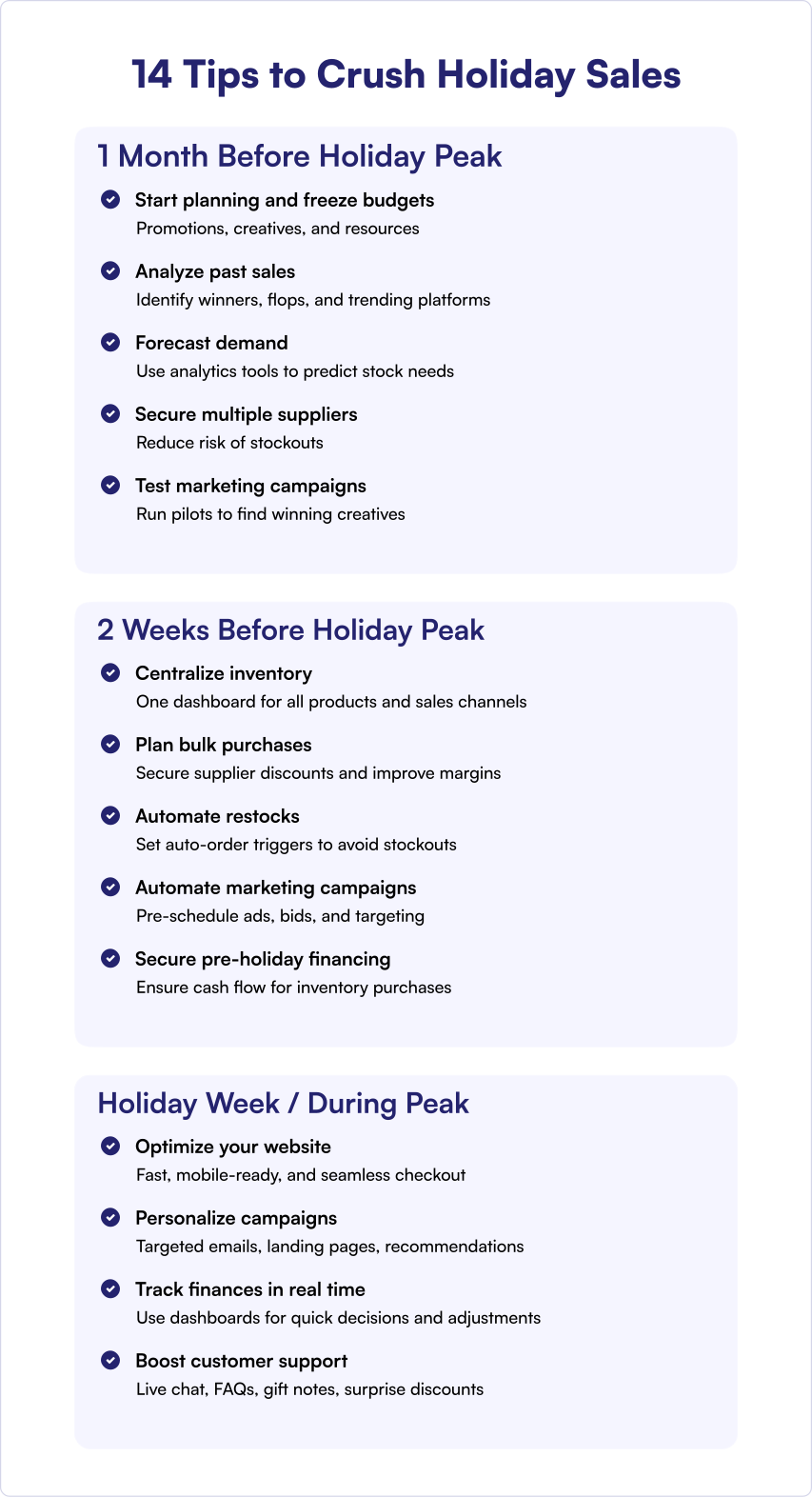
E-commerce holiday sales are the busiest time of the year. Here is a practical, time-based checklist to help you stay ahead and maximize revenue.
1 month before holiday peak
- Lock budgets and promotions – E-commerce retailers seeing consistent Q4 success start early, with budgets, creative assets, and promotional offers locked by the end of September. This provides ample time for strategizing, creative development, budget allocation, and securing necessary resources or funding while creating a buffer for unexpected delays.
- Analyze past sales data – Leverage platforms like Amazon, eBay, TikTok Shop, Lazada, and Shopee to analyze sales in real time. Dive into past holiday seasons to spot top-selling products, poor performers, and high-revenue drivers, then tie insights to current e-commerce shopping trends to maximize value for shoppers.
- Forecast demand with data – Inventory planning should never be guesswork. Use CRM or analytics tools that combine historical sales data, market trends, and predictive insights to generate accurate demand predictions.
- Line up multiple suppliers – Build relationships with more than one supplier to reduce dependency on a single source. This provides flexibility during peak sales and better leverage for pricing and terms.
- Run small campaign tests – 2–4 weeks before the season is ideal for testing ad creatives, landing pages, and messaging. Early tests help identify winning combinations so you can scale the best performers when holiday traffic peaks.
2 weeks before the holiday peak
- Centralize inventory – Keep all products and stock levels in one dashboard for a single view of what is available, what is selling fast, and what needs replenishing. This simplifies decisions and avoids costly surprises.
- Buy in bulk to cut costs – Secure financing early and negotiate bulk purchase discounts. This improves margins and avoids last-minute supplier markups. Missing these opportunities often means higher per-unit costs during peak demand.
- Automate inventory replenishment – Set up automated systems that trigger reorders when stock hits predefined thresholds. This reduces the risk of expensive last-minute restocks.
- Automate marketing campaigns – Use automation tools to schedule ads, adjust bids, and target audiences. This ensures campaigns launch on time and run smoothly, even when demand spikes.
- Secure pre-holiday financing – Explore financing options tailored for e-commerce businesses to maintain steady cash flow for stocking up and fulfilling large order volumes.

Holiday week and during peak season
- Optimize website performance – Ensure your site loads fast, is mobile-optimized, and offers express checkout. A smooth user experience reduces cart abandonment during heavy traffic.
- Personalize campaigns in real time – Use targeted emails, tailored landing pages, and product recommendations to maximize returns from ad spend. Personalization helps capture buyers’ attention when competition is high.
- Strengthen customer experience – Offer live chat, FAQs, and proactive support. Consider adding extras like gift consultations, personalized notes, or surprise discounts for delivery delays. These touches can turn challenges into opportunities for customer loyalty.
- Track finances in real time – Use modern dashboards to automate cash flow tracking and monitor sales performance. This enables quick decision-making and fast adjustments to campaigns, inventory, or spending.
Managing Cash Flow During Sales Season
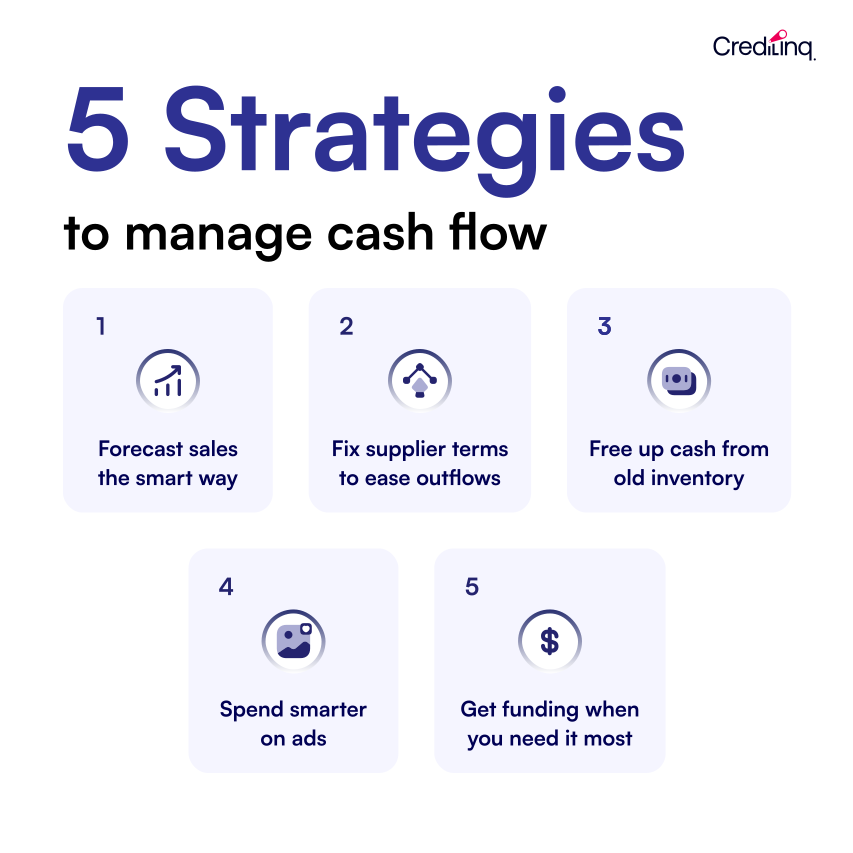
You can plan and optimize every aspect—forecast sales, negotiate supplier terms, free up old inventory, and adjust marketing spend—and still find that holiday sales eat up cash faster than it hits your bank account. That is why having a buffer of cash helps you ramp up during the busiest season.
While freeing up internal cash or inventory is a good start, it can only take you so far. Opting for an external e-commerce financing solution helps you stay ahead, ensuring you have the resources to expand to newer markets and marketplaces, stock top-selling products, run campaigns, and meet operational demands without disruption.
Traditional financing, such as bank loans, can be rigid, slow, and misaligned with seasonal cycles, making them less effective for time-sensitive sales periods. A number of companies provide alternative financing to e-commerce sellers – through inventory–based financing, merchant cash advances, working capital loans, and credit lines, each with their unique pros and cons.
Why CrediLinq stands out for e-commerce sellers
CrediLinq provides up to $2M in credit to ecommerce sellers globally.
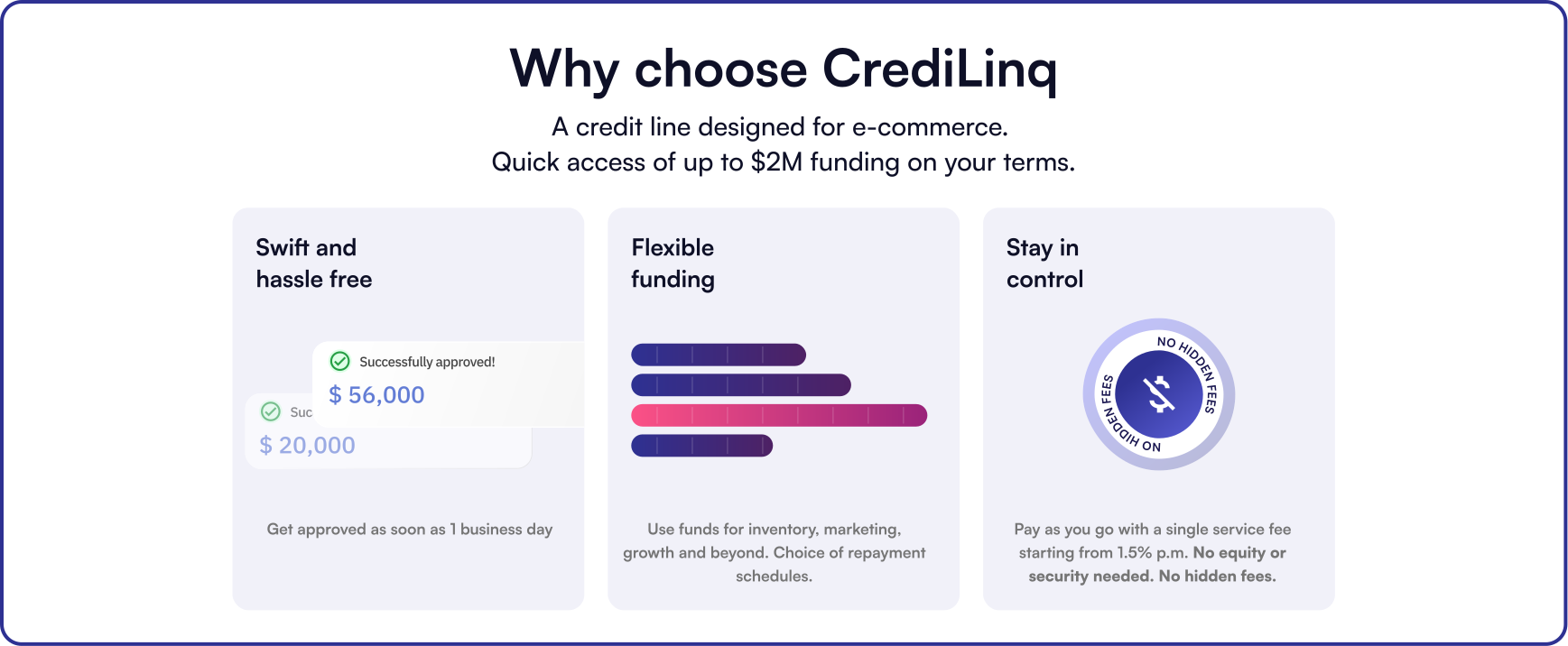
CrediLinq is built for how high-growth, million-dollar e-commerce sellers actually run their business: fast-moving, digital-first, and unpredictable at times.
- Easy access
Unlike banks that demand years of financial statements and collateral, CrediLinq keeps things simple.
If you have been selling for at least twelve months on major platforms like Amazon, TikTok Shop, Shopify, eBay, Lazada, or Shopee, and have $1M+ in combined annual sales, you qualify. CrediLinq connects directly to your store data, cutting out piles of paperwork.
Approvals happen in as little as one business day, so you move at the same speed as your business.
- Transparent, predictable fees
You only pay a flat monthly service fee starting from 1.5% per month or a simple fixed annual percentage rate (APR) of 18% on what you actually use – no hidden charges, no surprise penalties, no equity dilution. The repayment tenor is 3-6 months with tailored extensions available on a case-by-case basis up to 12 months. Repayments happen in equal biweekly installments, and you only pay interest on the amount you use. There is no lock-in period.
- Flexible usage
The credit line is a safety net you can dip into whenever you need it.
Restock bestsellers, launch a new product, increase ad spend, or expand to new marketplaces—it is your call.
With CrediLinq, funding moves swiftly.

Final Takeaways
- Plan smart, not late: Use sales data and forecasts to lock budgets and stock up by September.
- Automate where possible: Restocks, ad campaigns, and financial tracking should run on autopilot during peak.
- Secure funding early: Do not wait until cash is tight—set up a credit line in advance so you can scale when sales spike.
- Think beyond peak: Use holiday momentum to expand into new marketplaces or products with the right financial buffer.