



Highlights
Why This Matters to You
|
For most of the last decade, any package entering the US valued at under $800 could clear customs without duties, without a formal entry, and with little scrutiny.
That rule, known as de minimis, is why a $12 phone case shipped straight from a factory in Shenzhen could land on your doorstep in two weeks, all duty-free.
That rule is gone now, and it went in stages.
In May 2025, the exemption was suspended specifically for shipments from China and Hong Kong. By August 2025, an executive order extended the suspension to all countries.
Every commercial shipment, regardless of its value or origin, now requires a formal or informal customs entry, an HTS code, and full duty.
Then, in February 2026, the Supreme Court ruled that the administration had overstepped its authority in imposing a separate set of tariffs under emergency powers.
A lot of sellers heard that news and assumed de minimis was coming back with it. It is not. And understanding why matters more than the ruling itself.
Why the Court Ruling Didn’t Bring De Minimis Back
The tariffs the Supreme Court struck down were imposed under the emergency economic powers that the Court said Congress never meant to stretch that far.
The de minimis suspension was enacted under a completely different authority. There is also a second, sturdier layer underneath all of this. Back in July 2025, before any of the executive orders, Congress passed a law that eliminates de minimis by statute, permanently, effective July 1, 2027.
That means even if every current executive action were challenged and reversed tomorrow, the exemption would still disappear on schedule, a year from now anyway.
What Changes has De Minimis Influenced Operationally for Ecommerce Sellers?
Before the suspension, most small-parcel sellers never touched a customs broker. Packages moved through an informal process built for exactly this kind of low-value, high-volume shipping.
That informal process is gone for commercial goods. Every package now needs:
- A 10-digit HTS code identifying exactly what the product is
- A declared country of origin
- A formal or informal customs entry, depending on the value
- Payment of the applicable duty, plus processing fees like the Merchandise Processing Fee and Harbor Maintenance Fee
For postal shipments specifically, sellers are often looking at a flat fee per item or the standard duty rate, depending on which framework applies to that shipment.
Either way, the fixed cost of clearing a single package (brokerage, filing, processing) can now exceed the value of the cheap product itself.
That last part is the real problem, as the fixed cost of clearing customs at all no longer makes sense to pay for one package at a time.
What Sellers Who Have Adapted Are Actually Doing
Sellers who treated this as permanent and restructured early are, in many cases, already back to healthy margins.
Here is what that adaptation looks like in practice.
1. Stop shipping one package at a time
Brokerage fees and processing minimums are charged per customs entry, not per unit. A single entry covering 500 units costs roughly the same in fixed fees as one covering 5 units.
If you are still shipping individual parcels from overseas, you are paying that fixed cost over and over, on every single order, when you could be paying it once per container.
2. Bulk import, then fulfill domestically
This is the most common shift, and for good reason. Instead of shipping products directly from overseas to each customer, you bring inventory into the US in bulk, a full container load, clear customs once, and fulfill orders from a domestic warehouse from there.
The trade-off is real, as you need more capital upfront and are carrying inventory risk you did not have before. But the math works out better almost every time.
Duties are spread across thousands of units rather than applied individually. Domestic fulfillment means 2-day deliveries instead of 7 to 15 days from overseas, which also helps your conversion rates and your standing with marketplace algorithms.
3. Let your inventory sit in a bonded warehouse until it sells
If bulk importing solves the fee problem, a bonded warehouse or Foreign Trade Zone solves the cash flow problem that comes with it.
Goods held in a bonded warehouse do not trigger duty payment until they actually leave for a domestic sale. You are not paying duty on stock sitting on a shelf waiting for demand, only on what actually moves.
For a seller managing this transition, that distinction matters a lot. It means the capital you need is tied to what’s selling and not to everything you have imported.
4. Consider where your product is made
Not every country carries the same duty burden. Goods from China face the full accumulated tariffs and general duties, plus Section 301 tariffs layered on top.
Sourcing from Mexico, Vietnam, or India often carries a meaningfully lighter load, and goods that qualify under USMCA rules of origin from Mexico can, in some cases, avoid the base duty altogether.
This is not a decision to make overnight. Still, if your margins are being squeezed hardest on China-origin goods specifically, it is worth qualifying an alternative supplier now rather than later.
5. Check whether duty drawback applies to you
If any portion of what you import ends up re-exported, returned, or destroyed, you may be able to recover a large share, sometimes close to all of the duty you already paid on it. This has existed for large importers for decades.
It is increasingly worth the paperwork for smaller ecommerce operations too, particularly in categories with meaningful return rates.
Where the Cash Flow Gets Tight
Every one of the adaptations above solves the duty problem by trading it for a capital problem. Bulk importing means a bigger purchase order, paid upfront, before any of it sells.
A bonded warehouse defers the duty, but you still need to pay it the moment goods start moving. Switching suppliers to a new country means qualifying, testing, and often paying deposits on a second production line while your original one is still running.
None of this is a reason to avoid restructuring, but to make sure your working capital keeps pace with the model you are moving to.
This is genuinely where having available capital is important.
A seller shifting to bulk importing needs capital sized to the shipment, which is also available before the goods land, and can be repaid once that inventory sells through and settles. This is how a credit line works, and CrediLinq is built around this funding mechanism.
Using CrediLinq to Fund Your Bulk Import Shift
Moving from single-parcel shipping to bulk container imports is the right call for most sellers navigating the de minimis suspension, but it changes when you need capital and how much you need.
Instead of paying small duty amounts across dozens of individual shipments spread over weeks, you are now committing a larger sum upfront.
Here’s how sellers typically use it during this transition:
- Fund the duty and freight costs on a bulk shipment while waiting for the previous batch of inventory to sell through and settle
- Cover a bonded warehouse withdrawal the moment goods are ready to ship to customers, without disrupting cash earmarked for payroll or ad spend
- Qualify a second supplier in a lower-duty country by funding trial orders and deposits without pulling capital from your existing production line
The draw is sized to the shipment, not to a fixed annual amount, and repayment lines up with when that inventory actually sells. Hence, the facility works with your restructuring timeline instead of against it.
If the de minimis suspension is pushing you toward bulk importing, the capital side of that shift does not have to be the hard part.
Why CrediLinq
For sellers restructuring around the de minimis suspension, the financing needs to move at the same pace as the shipment, not slower. With CrediLinq:
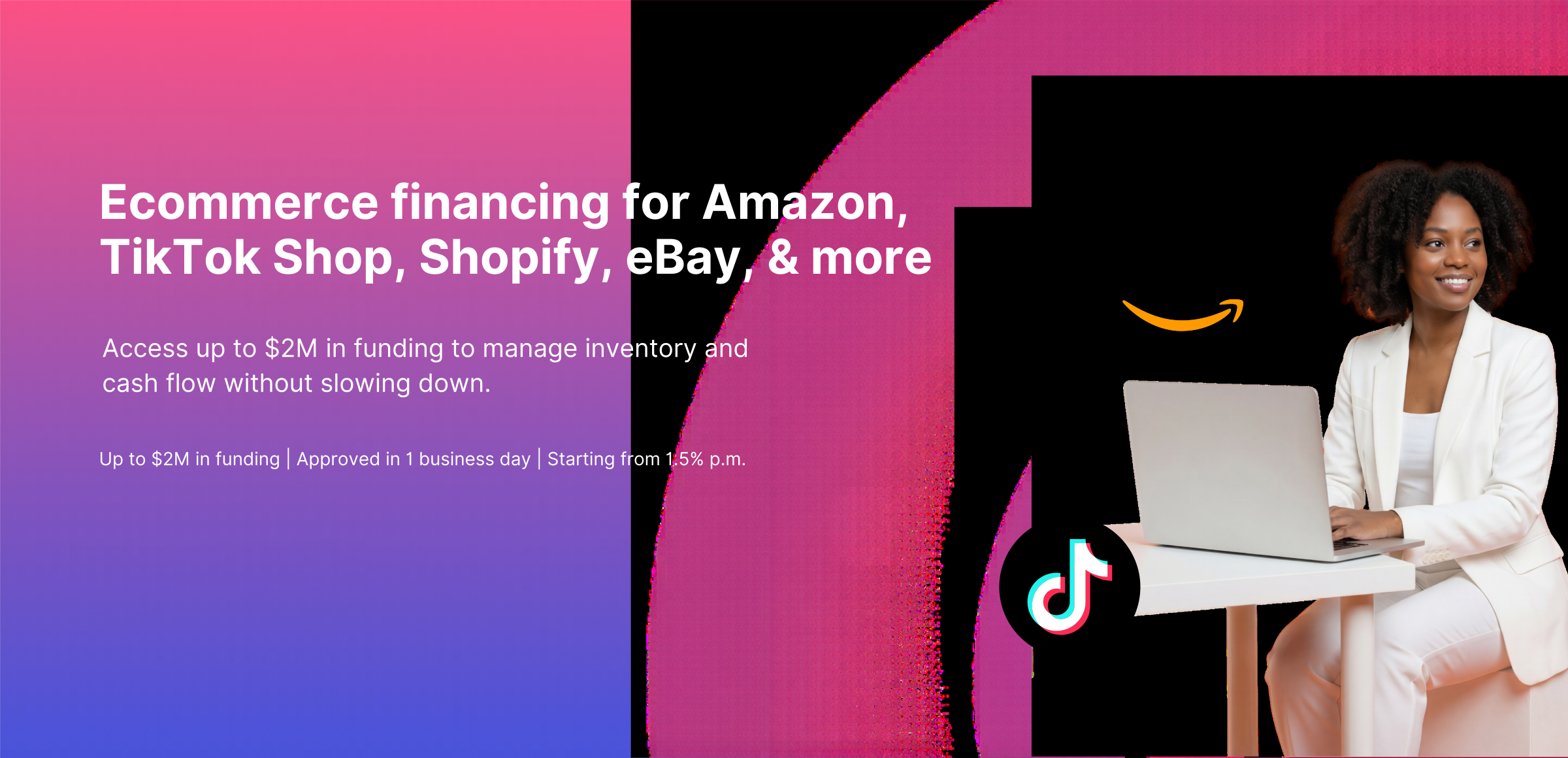
- Approved sellers can access up to $2M, with decisions typically made in under one business day based on your store’s sales performance rather than a credit check or collateral requirement
- Pricing is a single, transparent monthly service fee starting as low as 1.5%, or a simple fixed APR of 18%, applied only to the funds you actually draw, with no compounding interest, no revenue share, and no equity given up
- The line is flexible, so once approved, you can draw, repay, and then draw again within your limit without reapplying each time, and repayment tenors range from 3-6* months.
- Funds aren’t restricted to a single use case, so the same line that covers a duty and freight payment this month can cover a bonded warehouse withdrawal or a second supplier’s deposit the next
*Tenor can extend up to 12 months on a case-by-case basis for sellers who need more runway between paying duty and selling through inventory.
Eligibility is based on business performance rather than personal financials or collateral:
- $30,000+ in combined monthly revenue
- At least 12 months of selling history
- Registered business based in the US, UK, or Singapore
- Active on Amazon, Walmart, TikTok Shop, Shopify, Temu, eBay, Lazada, Shopee, or similar marketplaces
Getting started is a matter of connecting your accounts rather than filling out a loan application:
- Connect your marketplace accounts or upload your store data
- Share your bank statements
- Get a funding decision, typically within a business day
See what your marketplace sales performance qualifies for with CrediLinq.
Final Takeaways
|
Frequently Asked Questions
Does the de minimis exemption suspension apply to all countries or just China?
All countries. It started with China and Hong Kong in May 2025 and was extended to all countries worldwide by August 2025, partly to close a loophole through which goods were routed through third countries to evade the China-specific rule.
What is the actual cost now for a shipment that used to be duty-free?
It depends on the shipment method and value. Still, every commercial package now requires a formal or informal customs entry, an HTS code, a declared country of origin, and payment of the applicable duty plus processing fees.
For postal shipments specifically, sellers often look at either a flat per-item fee or the standard duty rate, depending on which framework applies.
Can I get any of the duty I have already paid back?
Possibly. If the goods you imported end up being re-exported, returned, or destroyed, duty drawback programs can recover a significant portion of what you paid on them.
This has traditionally been used by larger importers, but it is increasingly worth the paperwork at ecommerce scale, particularly for categories with higher return rates.
References
- https://www.federalregister.gov/documents/2026/06/24/2026-12670/indefinite-suspension-of-the-de-minimis-exemption-for-merchandise-arriving-through-all-modes-other
- https://www.freightfigures.com/articles/de-minimis-exemption-suspended-2026
- https://www.cnbc.com/2025/08/29/retail-impact-de-minimis-exemption-ends-globally.html
- https://www.freightfigures.com/articles/de-minimis-exemption-suspended-2026
- https://www.practicalecommerce.com/ecommerce-after-de-minimis-tariff-exemption
- https://tariffdesk.com/learn/de-minimis-explained-2026