



TL;DR
- Grants can help, but they are not “free money.” Most come with eligibility filters, reporting requirements, and a fair amount of administrative work.
- For marketplace-first sellers, grants are not always a fit unless your brand is working toward larger goals like export growth, sustainability, or inclusion.
- They are best viewed as strategic tools—not quick fixes—for brands with the time and structure to manage the process.
- If that is not your current direction, faster and more flexible funding options, such as credit lines, revenue-based financing, or microloans, better suit your goals.
Business grants often sound like a dream—money you do not have to pay back. And while that part is true, the full picture is more complex.
Most grants come with specific eligibility requirements, tough competition, and detailed follow-up obligations such as reporting and milestone tracking. In other words, grants are not just free cash.
Especially, for most marketplace sellers, grants are not usually the go-to funding option. Unless your brand is doing more than just selling—such as expanding exports, using eco-friendly packaging, or creating jobs locally—most grant programs are not even applicable.
In this blog post, we will take an objective look at how business grants work, when they make sense for e-commerce brands, and what other funding options to consider if a grant is not the right fit.
What Are Business Grants?
Business grants are funding programs designed to support specific types of businesses or initiatives, without expecting repayment. Unlike loans or investor capital, grants do not require you to give up equity or pay interest.
However, that does not mean they come without strings.
Most grants are tied to clear goals, such as encouraging innovation, boosting exports, supporting underrepresented founders, or driving sustainability. To qualify, you need to meet strict criteria and show how your business aligns with the grant’s purpose.
Are There Really Grants for E-commerce?
For E-commerce brands, grants fund expansion plans, product development, or operational upgrades—but only if they create measurable change—launching sustainable packaging, entering new global markets, developing custom technology, or supporting underserved communities.
They rarely support everyday sales activities, such as managing inventory or running ads.
For example, Dawn Myers, Richualist, didn’t just launch a beauty product. She designed an inclusive, tech-forward grooming tool (The Mint) that specifically caters to underserved Black consumers with textured hair, helping her raise over $175,000 in non-dilutive grant funding from organizations like Procter & Gamble, the New Voices Fund, and Sephora’s Accelerate program.
Top Grants for E-commerce Businesses in 2026
Several active programs, typically run by government agencies, local councils, or nonprofit organizations, support online brands with a specific economic or social mission in mind.
Here are some of the most relevant grant opportunities available in the US.
- STEP Grant (State Trade Expansion Program) – The STEP Grant helps small businesses expand internationally by covering costs such as website translation, e-commerce localization, export shipping, and participation in global trade shows. It is run through the U.S. Small Business Administration and administered at the state level.
- Amber Grant – Offered by WomensNet, the Amber Grant awards $10,000 each month to a woman-owned business, with a chance to win an additional $25,000 at the end of the year.
- Hello Alice Small Business Grants – Hello Alice partners with various corporations and nonprofits to offer rolling grant programs focused on underrepresented founders, veterans, and small business owners. Grants can be used for hiring, marketing, or operational costs.
- SheaMoisture Fund – Black-owned e-commerce businesses can apply to programs like the SheaMoisture Fund, which offer funding, mentorship, and exposure to scale their operations and increase reach.
How to Qualify for E-commerce Business Grants
Most grants are issued to support broader outcomes, including economic development, innovation, sustainability, and community impact. For e-commerce brands, this means showing more than just sales traction.
You will typically need to demonstrate how your business contributes to one or more of the following:
- Job creation – Are you hiring locally or creating roles that contribute to the economy?
- Export activity – Are you expanding into international markets?
- Innovation – Are you developing new products, using technology in a novel way, or improving customer experience?
- Sustainability – Are you reducing environmental impact through materials, packaging, or supply chain practices?
- Inclusion – Are you a minority-, women-, or veteran-owned business, or supporting underserved communities?
If your e-commerce business can clearly communicate its alignment with any of these themes, you stand a stronger chance of qualifying.
What You Will Need to Apply
Grant programs typically expect a well-organized set of documents that help assess your business’s stability, impact, and readiness to use funds effectively.
At a minimum, most applications will require:
- Registered business – Whether sole proprietorship, LLC, or corporation, you must be legally established in the country you’re applying in.
- Business plan or pitch deck – This should outline your mission, operations, and how the grant funding will be used to achieve specific goals.
- Financial records – This could include recent profit and loss statements, revenue reports, or projected forecasts. Even early-stage brands may need to show estimates backed by market research.
- Proof of impact (where applicable) – If the grant is linked to sustainability, community benefit, or diversity, you may be asked to share evidence, such as sourcing practices, hiring records, or supplier certifications.
Strong documentation not only improves your chances of approval, but it also makes post-award reporting easier if your application is successful.
Tips to Increase Your Chances of Winning
If you find a grant that aligns with your brand’s mission, here are a few ways to strengthen your application and stand out in a competitive pool:
- Only apply when you are a strong match – Read the grant criteria closely. If your business does not tick the boxes—whether it’s innovation, export, or sustainability—focus your efforts elsewhere. Grant reviewers can usually spot a weak fit quickly.
- Craft a narrative, not just a pitch – Use your application to tell a cohesive story: who you are, what your brand does, the problem you solve, and why now. A compelling narrative—especially from underrepresented founders—makes a technical application more memorable.
- Leverage local support programs – Small Business Development Centers (SBDCs), and chambers of commerce provide free resources, review services, and even writing support to help refine your submission.
- Start local or niche – Competition is often lower in city- or region-specific programs, or grants focused on your industry segment. These can also be stepping stones to larger national or international grants later.
Are Grants the Right Move for Your E-commerce Brand?
Grants can be appealing, but for fast-moving e-commerce brands, especially those focused on marketplaces or DTC channels, they are not always the most practical funding route.
Here are a few caveats to keep in mind before diving in:
- Lengthy application process – Most grants require detailed proposals, financial records, and clear alignment with the funder’s mission. This takes days or weeks that could otherwise be spent on marketing, inventory planning, or operations.
- No guaranteed outcome – Even if you meet all the eligibility criteria, many grant programs are highly competitive. A strong application does not always guarantee approval.
- Post-award requirements – Grants often require detailed progress reports, proof of how funds were used, and meeting specific milestones. For example, if you receive a STEP Grant, you are required, under the Terms and Conditions, to submit progress performance reports up to five times a year, detailing export activities, sales figures, and trade barriers encountered. Failure to comply could result in the withdrawal of funds.
- Unsuitable for lean teams – For sellers juggling product launches, customer service, and logistics, managing a grant can become another layer of admin that slows down momentum.
- Restricted fund usage – They are typically designed to support innovation, expansion, or social impact, rather than routine e-commerce needs such as ad spend or stock replenishment.
In short, grants are best suited for brands with a longer-term project in mind and the operational headroom to manage the process from start to finish. If your current priority is speed, flexibility, or cash flow management, alternative funding options will be a better fit for you.
Business Grant Alternatives for E-commerce Funding
While grants may not be a fast or flexible fit, these e-commerce financing options are more aligned with the marketplace-native sellers.
1. Line of credit
A business line of credit is similar to a credit card: you have an approved limit and only pay interest on the funds you draw.
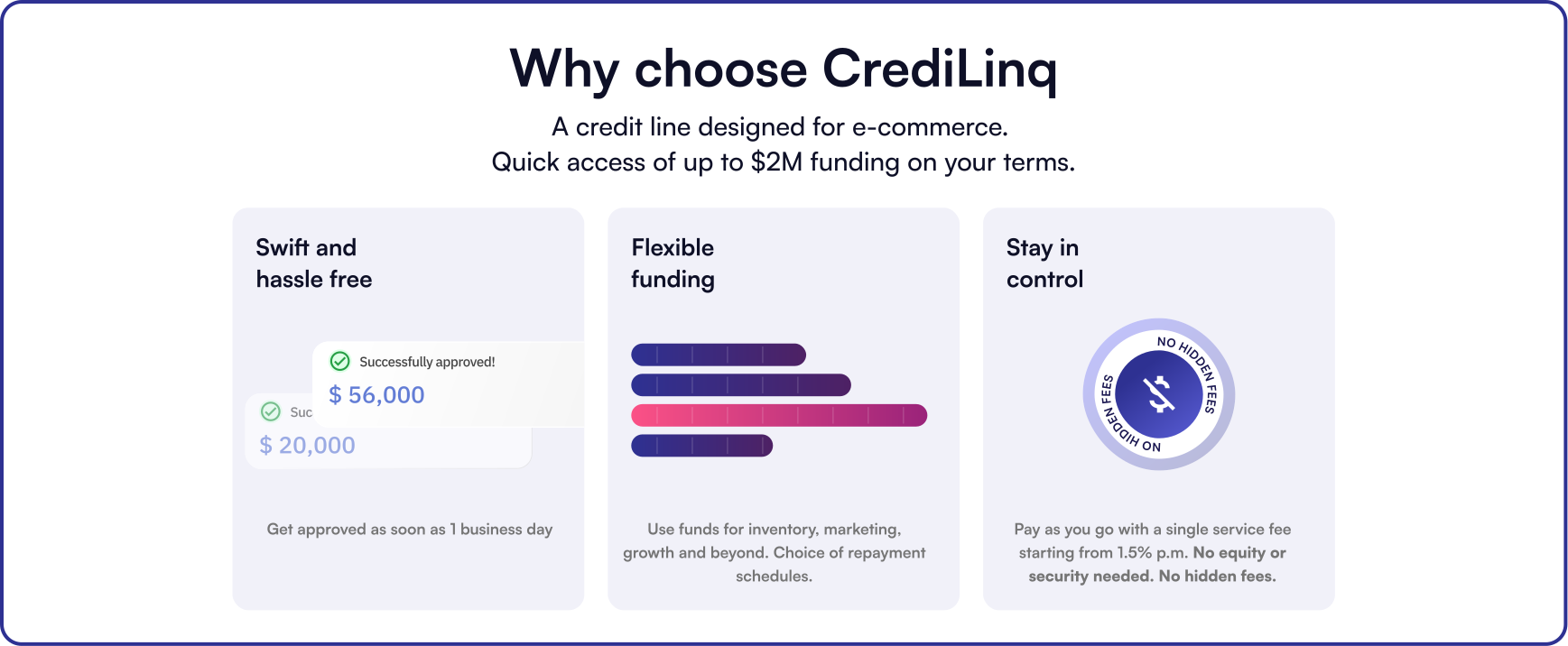
For e-commerce sellers, CrediLinq provides on-demand flexibility—ideal for expanding your product line or going into new markets, managing inventory, running ads, or handling short-term expenses around sales peaks.
This option works well because you only borrow as needed, and you can get approved within one business day.
Approval requires connecting the platform to your online store (Amazon, TikTok Shop, Shopify, eBay, Lazada, Shopee and more). You can get approved for up to $2M in funds within 1 business day based on your store performance and Plaid data.
CrediLinq provides growth financing at fees starting from 1.5% per month or a simple fixed annual percentage rate of 18% on the funds you draw down.
Repayments stretch across 3-6 months, with possible extensions up to 12 months on a case-by-case basis.
This flexible credit line by CrediLinq is attractive to high-growth, million dollar ecommerce sellers who are looking for scalable funding and quick approvals without waiting weeks to get funded.
Best for: Marketplace sellers with regular sales needing predictable liquidity
2. Revenue-based financing
Revenue-based financing provides you with upfront capital and allows you to repay a percentage of your ongoing sales. Payments shrink during slow periods and rise during peaks, making it inherently aligned with marketplace cycles.
This is particularly appealing for sellers scaling rapidly on marketplaces such as Amazon, eBay and Shopify, Shopee, or Lazada, as it’s based on sales velocity rather than credit history. On the flip side, the total cost is predetermined, so if your sales don’t grow fast enough, you could be repaying for longer than expected, which strains cash flow over time.
Best for: Sellers with strong, growing sales who want scalable funding
3. SBA microloans
The Small Business Administration (SBA) Microloan program offers loans of up to $50,000 through nonprofit lenders, providing affordable financing for entrepreneurs who may not qualify for traditional credit. For U.S.-based e-commerce brands, these loans are helpful for early-stage product launches or initial inventory investments.
The downside is a relatively lengthy review process and stringent documentation requirements, including business plans and financial projections. They are also not designed for urgent cash needs.
Best for: U.S. sellers planning a first major launch or modest scale-up
4. Crowdfunding
Crowdfunding lets you raise capital by pre-selling your product or offering early-access perks. It generates funds while also serving as a marketing tool and helps validate demand before investing in manufacturing or inventory.
This route shines for creative DTC brands with a compelling story or niche market; success can mean thousands of prepaid orders. However, meaningful campaigns require substantial effort—such as video creation, community outreach, and fulfillment preparation—which do not suit those seeking quick funding or who prefer to stay behind the scenes.
Best suited for: Product-based DTC brands launching new products or targeting a specific audience
Are Grants Worth It for E-commerce Brands?
Business grants are not a silver bullet, but in the right context, they create meaningful opportunities. They tend to work best when your e-commerce brand is addressing a broader challenge, such as expanding internationally, establishing sustainable practices, or driving innovation.
For most fast-moving D2C or marketplace sellers, though, grants come with trade-offs—time-consuming applications, competitive pools, and administrative overhead. If your goal is to access working capital quickly for inventory, advertising spend, or daily operations, alternative financing options are a better fit.
That said, grants are worth considering when they align closely with your brand’s mission and growth plans. Just approach them as a strategic project, not a shortcut.