


Overview
- Inventory lines of credit let eCommerce sellers borrow using existing inventory or sales as collateral to manage cash flow.
- Sales-based credit lines are simpler, faster, and better suited for fast-moving ecommerce businesses.
- Revolving lines of credit offer flexible borrowing, with fees charged only on the amount used.
- Eligibility, fees, repayment terms, and provider features vary—choosing the right lender matters.
Why This Matters to You
- Stay ready for sudden demand: Access funds quickly to restock or fulfill large orders without waiting for payments.
- Avoid inventory collateral hassles: Sales-based credit lines reduce paperwork, inspections, and hidden fees.
- Understand true costs: Knowing fees and repayment options helps prevent unexpected expenses.
Securing large orders at the last minute isn’t easy—especially when your payouts haven’t hit your bank account yet.
An inventory line of credit solves this by offering funds with your existing inventory or sales as collateral.
But using your inventory as collateral—also known as asset-based lending—can be complicated for fast-moving ecommerce sellers. You might face the following hurdles:
- Lots of paperwork
- Strict loan rules to follow
- Regular checks on your stock
- Extra fees and costly inspections
Plus, you don’t always have enough inventory sitting around to use as collateral.
So, in this blog, we’ll walk you through how sales-based lines of credit work, what fees and repayments to expect, the pros and cons, and a comparison of top lenders—so you can find the right inventory financing for your business.
What Is an Inventory Line of Credit?

An inventory line of credit gives you flexible access to funds specifically to buy or restock your inventory. Think of it as a credit limit you can tap into whenever you need to stock up—pay back, then borrow again without reapplying.
Such a line of credit helps you in the following situations:
- You experience unpredictable or irregular cash flow. A flexible credit line helps smooth out the ups and downs of your sales cycle.
- You face predictable seasonal demand spikes. You need to stock up ahead of holidays or sales events to meet higher customer demand.
- You want to act quickly on limited-time supplier deals. Discounts or bulk offers from suppliers often require fast payment to save costs.
- You sell across multiple platforms with varying payout schedules. Cash from Amazon, Shopify, or Lazada arrives weeks apart, making it hard to manage inventory purchases.
- Your best-selling products risk selling out before you can restock. Avoid lost sales and disappointed customers by securing funds to replenish inventory promptly and avoid poor ratings.
- You run short-term promotions or advertising campaigns. These usually require upfront payments, even if the resulting sales revenue comes later.
If your business is new with inconsistent sales or you need capital for long-term projects like hiring or product development, consider these alternative ecommerce business loans.
Think an inventory line of credit fits your needs? Let’s cover how to qualify, what it costs, and how you’ll repay.
Eligibility
With most revolving inventory credit lines, your past sales are the main proof lenders look at. If you’ve been selling steadily, that’s your biggest advantage.
The catch?
Many providers still want extra paperwork—bank statements, tax returns, proof of inventory, supplier contracts, payout reports from every platform you sell on, and even your incorporation paperwork.
By the time you’ve gathered all that, the supplier discount you were chasing could be gone.
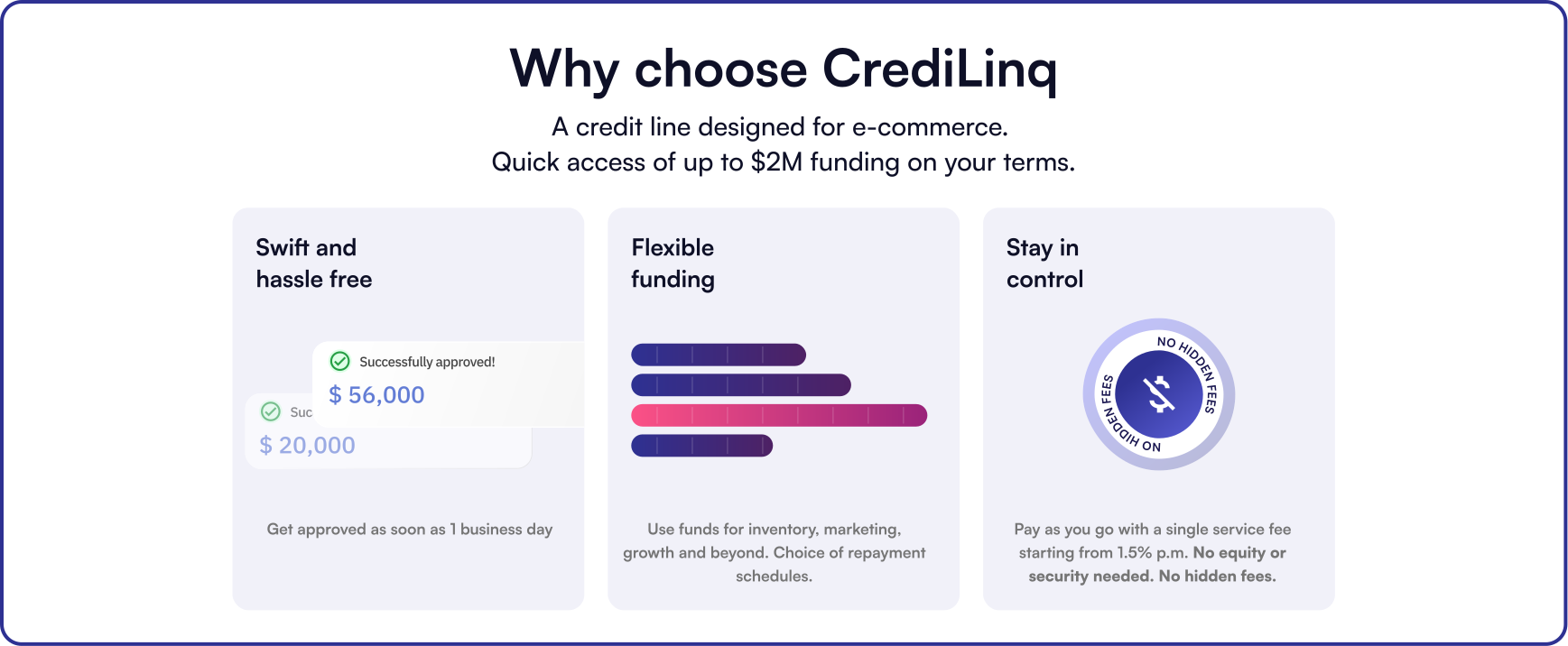
With CrediLinq, eligibility is straightforward. You qualify if you have:
- At least 12 months of selling history on supported platform(s)—Amazon, TikTok Shop, Shopify, eBay, Lazada, Shopee, and more
- Combined sales of all stores greater than US$1M annually
- A registered business (not including individual sellers or sole proprietors)
No manual paperwork. No long forms. Just connect your store and your Plaid account/bank statements, and get approved in as little as one business day.
Fees
Credit lines come with a mix of charges—some visible, some hidden. Common fees include:
- Annual or maintenance fees for keeping the account open
- Origination fees when you first set up the credit line
- Withdrawal fees each time you draw funds
- Early repayment penalties if you clear the balance before the term ends
With CrediLinq, the math is cleaner. You pay one flat monthly service fee starting at 1.5% per month or a simple fixed annual percentage rate (APR) of 18% on the amount you withdraw. No charge if it sits unused and no penalty for repaying early.
Repayments

*Customized solutions are available upon request. Loan tenors can extend up to 12 months on a case-by-case basis.
Cash flow isn’t just about getting funds, it also includes paying them back without choking your business.
- Some lenders take a daily cut of your sales. That’s fine when orders are pouring in, but in slow weeks, the balance drags on and costs you more.
- Others set fixed monthly payments. Predictable, yes, but they don’t care if you have just come out of a slow month or had unexpected returns. That leaves sellers at risk of late fees, with no relief even if they repay early, since many lenders still charge part of the interest.
The most seller-friendly option? Repay on your terms within a set window.
With CrediLinq, you can choose a 3-6 months repayment period. Pay in small chunks as sales come in, or clear it early with zero penalties.
You only pay fees on what you used that month, freeing up more cash for the next batch of inventory.
Pros and Cons of an Inventory Line of Credit
An inventory line of credit can smooth out cash flow and fuel growth, but the wrong terms can drain profits just as quickly.
Here’s a clear look at the benefits and the pitfalls so you know exactly what you’re signing up for.
Pros of an inventory line of credit
The right line of credit means you never have to pause growth while waiting for payouts.
- No need for personal collateral: Your eligibility is based on your store’s sales performance, not your personal assets. This means you secure funding without risking property, savings, or other personal valuables.
- No need to reapply: Once your line is approved, you can borrow, repay, and borrow again—within your limit—without starting the application process all over. This keeps funds accessible when opportunities or challenges come up unexpectedly.
- Flexible usage: You decide how to use the funds—whether for market expansion, product launches, inventory reorders, ad campaigns, supplier payments, or urgent restocks. There is no requirement to spend it in a fixed category.
- Pay fees only on what you use: Instead of paying interest on the full credit limit, charges apply only to the amount you have drawn. This makes it cost-effective when your borrowing needs are occasional or seasonal rather than constant.
Cons of an inventory line of credit
Not all credit lines are created equal. The fine print—hidden in complex terms—makes borrowing more expensive or less flexible than expected.
- Lengthy applications: Even with sales-based approvals, many providers still request bank statements, tax returns, or detailed financial reports. This slows access to funds—problematic when you need capital quickly for urgent inventory or campaigns.
- Complex fee structures: Variable interest rates, tiered pricing, or unclear fee breakdowns make it difficult to calculate your true cost of borrowing upfront.
- Hidden fees: Beyond interest, you might face annual maintenance fees, withdrawal charges, or origination fees. These add to your total cost of borrowing—sometimes significantly—if you use the credit line frequently.
- Tricky repayment terms: Some lenders collect daily or weekly repayments, which strains cash flow during slow sales periods. Others stretch repayments over months, increasing your total cost. It’s important to match repayment style with your sales cycle.
Top Inventory Line of Credit Providers for Ecommerce Sellers
Here is an overview of leading providers designed for ecommerce businesses. This will help you identify the best fit for your business needs and operational style.
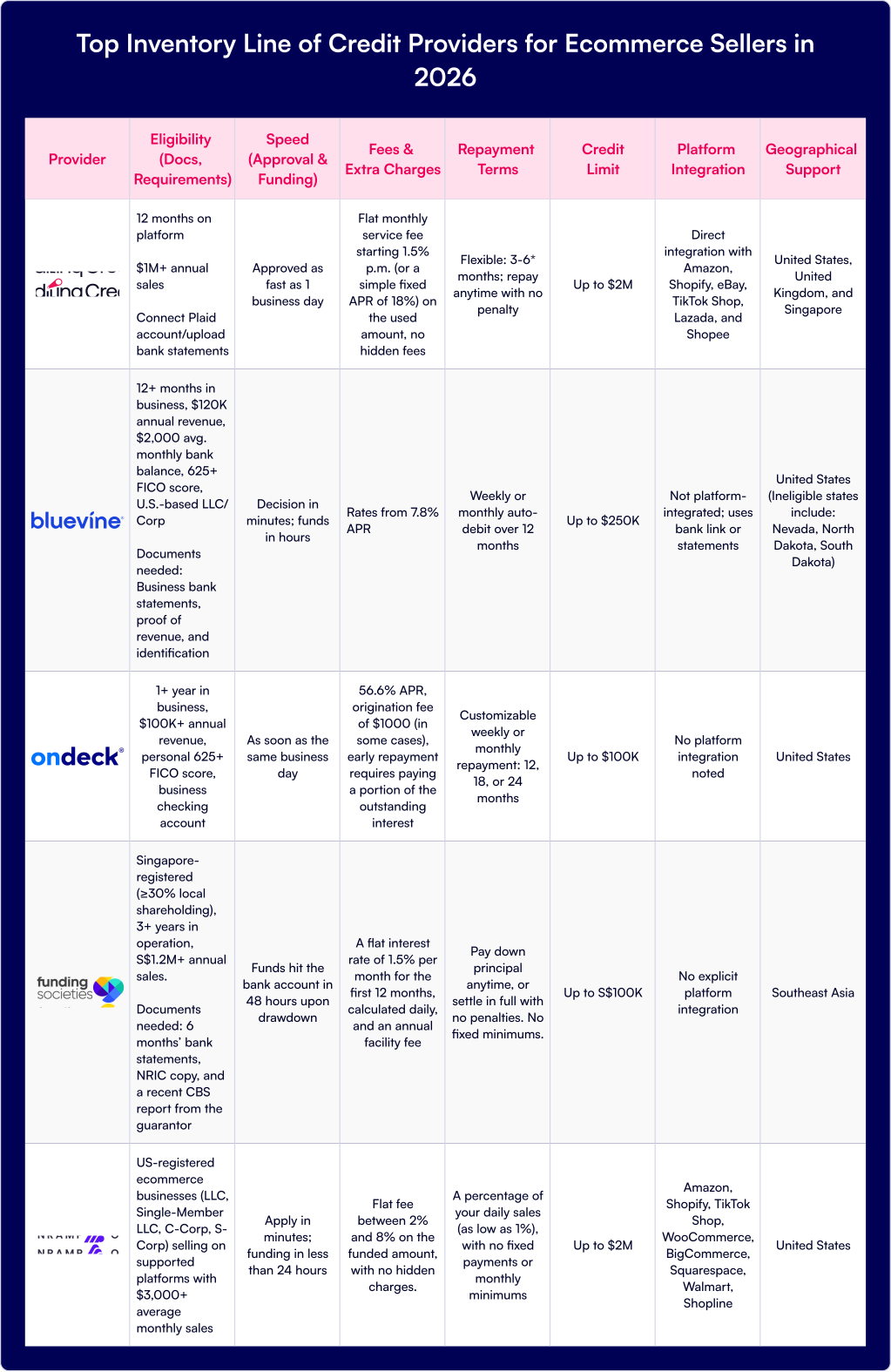
*Customized solutions are available upon request. Loan tenors can extend up to 12 months on a case-by-case basis.
Waiting too long to secure funding slows growth and causes missed opportunities. The sooner you have access to the right credit, the better you respond to your business needs.
CrediLinq helps sellers worldwide secure funding based on their ecommerce sales, with credit limits that grow as the business grows. That means no more stopping to reapply or worrying about cash shortages when demand spikes.
By connecting directly with major platforms like Amazon, Shopify, eBay, TikTok Shop, Lazada, and Shopee, CrediLinq keeps your available credit aligned with your actual sales—making it easier to manage cash flow without surprises. Plus, with quick approval times and clear, straightforward fees, sellers can focus on growth instead of paperwork or hidden costs.
If you want funding that keeps pace with your business, don’t wait. Apply with CrediLinq today and be ready to seize every opportunity as it comes.
Frequently Asked Questions (FAQs)
- What is an inventory line of credit?
It’s a flexible credit limit that helps you buy inventory without waiting for sales. You can borrow, repay, and borrow again as needed. CrediLinq offers this with easy approval and no heavy paperwork. - How does an inventory credit line work?
You get a set credit limit based on your sales. Borrow only what you need, repay monthly, and reuse funds. With CrediLinq, repayments are flexible, and fees apply only to what you use. - Is inventory financing the same as a line of credit?
Not always. Inventory financing often means a one-time loan for stock. A line of credit lets you borrow repeatedly up to a limit. CrediLinq’s credit line is designed for ongoing cash flow needs. - What are the pros and cons of inventory credit lines?
Pros: Flexible borrowing, no personal collateral, pay fees only on funds used. Cons: Some lenders have complex fees or strict repayment terms. CrediLinq keeps things transparent and straightforward. - Who qualifies for an inventory line of credit?
Usually, sellers with a steady sales history qualify. CrediLinq requires just 3 months on an ecommerce platform and $100K+ annual sales, with no bank statements or financials needed.
Final Takeaways
- Prioritize lines of credit that use sales data to minimize documentation and speed approvals.
- Review all fees carefully—including monthly service fees, withdrawal charges, and early repayment terms.
- Opt for repayment plans that align with your sales rhythm to avoid cash flow pressure.
- Compare credit limits, approval speed, platform integration, and regional availability before choosing a provider.