


A 6-Step Guide to Smarter eCommerce Seller Financing

Overview
Before you apply anywhere, understand what is holding you back: timing, growth, inventory, or cash flow. Then match that constraint to the right funding structure.
Here is what this framework helps you do:
- Diagnose your constraint first (timing, inventory, growth, cash flow), then match to the right structure
- Use your live sales data to replace traditional paperwork requirements at modern lenders
- Compare full cost (fees, terms, collateral), not just headline rates
Platform lenders like CrediLinq approve in as little as 1 business day based on store and bank data—no collateral, pay only on what you draw.
Why This Matters to You
- E-commerce decisions are time sensitive: missing a supplier discount or seasonal window costs real sales.
- Choosing the wrong product (a term loan for a short-term inventory need, or equity for working capital) is expensive and constraining.
- Modern lenders underwrite differently. Knowing how they see your business shortens approvals and lowers friction.
When you search “how to fund my eCommerce business,” the options can feel endless: credit lines, merchant cash advances, term loans, revenue-based financing, even equity. Each one promises something different, but none start by asking what you actually need right now.
Maybe you are trying to bridge a payout delay, restock before the next sale, or free up cash for ads. The hard part is figuring out which type of funding truly fits your situation. And that is where most sellers get stuck.
In this guide, we will break down a simple six-step process for choosing the right eCommerce seller financing for your business based on your timeline, cost tolerance, and preferred level of control.
Step 1: Assess Your Current Financial Reality
The first step is not “how much should I borrow?” It is “what is my current cash position?” Because the answer determines whether you have a shortage problem or a timing problem. Those require different solutions.
- Cash on hand (not profit): Profit is what your accountant sees. Cash is what you can actually spend. If you are profitable on paper but short on funds, you have a timing issue, not a profitability problem. Timing issues call for flexible credit lines. Shortage problems might need term loans or equity.
- Sales history over the last three months: Are sales growing, flat, or seasonal? Predictability matters because it shows lenders how reliably you can handle repayments. Stable or growing patterns qualify faster than erratic spikes.
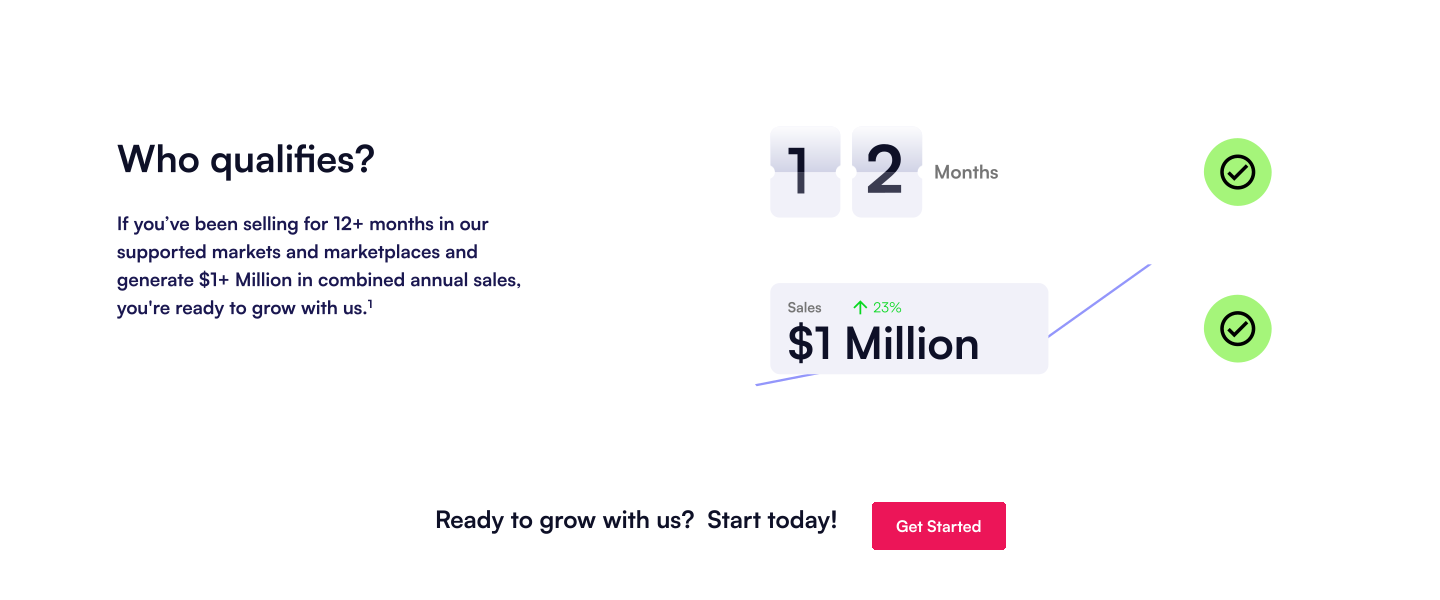
- Track record on platforms: Most modern lenders require at least three months of selling history to qualify. That is the eligibility floor: enough data to assess your business without requiring years of tax returns.
Once you know where your money stands, you can decide whether you truly need outside funding or simply better cash flow timing.
How modern lenders actually look at your business
Traditional banks still rely on bank statements and tax returns that look years backward, a requirement that disqualifies most early-stage sellers. However, eCommerce moves faster than that.
Platform-based lenders, like CrediLinq, have flipped the model.
Instead of asking for historical documents, they connect directly to your live sales data on eCommerce platforms like Amazon, TikTok Shop, eBay, and Lazada, or you can also upload your Shopify and Shopee data. Your sales data becomes the proof. No tax returns needed.
This enables you to qualify for funding faster and with less friction.
Step 2: Define Your Funding Goal (Not Just the Amount)
The next step is clarity on why you need funding, not just how much.
Funding has a purpose. Sometimes, it is to expand to a new market. Sometimes it is to restock inventory before a seasonal spike. Sometimes it is to fuel marketing spend for a new product launch. Sometimes it is to cover the gap between supplier payments and marketplace payouts.
Each goal calls for a different funding structure:
- A short-term inventory crunch calls for a flexible credit line where you draw and repay quickly
- A longer-term scaling play calls for a term loan with monthly installments you can depend on
- A chronic payout gap calls for working capital financing that moves with your sales rhythm
Define the problem first. The amount will follow.
Funding that adapts to your business
Most sellers do not have just one funding need. This month, it is inventory. Next month, it is ads or a new channel test. That is why rigid structures create problems.
CrediLinq offers a credit line that adapts to shifting priorities to offer credit from $50K up to $2M, where you can do the following:
- Draw what you need for restocking, supplier payments, expansion, or marketing
- Pay only on the amount you use (starting at 1.5% per month)
- Repay in 3-6 months with no penalties
- Get approved in as little as 1 business day
That structure matches how fast-moving online businesses actually operate, where priorities shift every week based on sales data and market opportunities.
Step 3: Evaluate Your Timeline and Speed Requirements
The difference between needing money in two weeks versus two months changes which options are even realistic.
If you are facing a time-sensitive opportunity: a supplier discount that expires, a flash-sale window, or a marketplace campaign you want to capitalize on, you need a lender that moves faster than traditional banks.
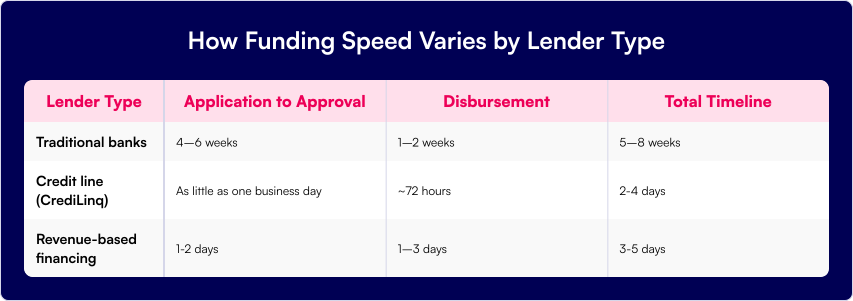
The rule: Know your timeline first. Then match it to a lender’s speed. If a lender advertises “approval in 7 days” but you need funds in 48 hours, do not waste your time applying.
Step 4: Understand the True Cost (Beyond Interest Rates)
Interest rates tell only part of the story. The total cost of capital includes fees, restrictions, collateral requirements, and repayment flexibility. Focusing only on the headline rate is how sellers end up paying far more than they expected.
Here is the complete breakdown of what drives your real cost:
1. Interest or service fees
Some lenders charge a percentage per month or per year. Others apply a flat fee. In some cases, the rate is based on the total approved amount. In others, it applies only to the funds you actually draw. The structure matters because it directly affects your true repayment cost.
Example: How fee structures change your real cost
You are approved for a $50,000 line of credit at 2% per month.
- Charged on the total approved amount: You pay $1,000 per month, even if you only draw $10,000
- Charged on the amount drawn: You pay $200 per month when you draw $10,000
The structure matters more than the rate.
2. Hidden or secondary fees
Processing fees, underwriting fees, documentation fees, late payment fees, and early repayment penalties add up quickly. A lender advertising “6% fee” might actually cost you 9% or more in terms of APR when you factor in all the extra charges.
Here is how fees compound in a typical scenario:

Read the fine print. Ask what fees exist. If a lender gets vague, that is a warning sign.
3. Collateral or personal guarantees
If a lender asks you to pledge personal assets or personally guarantee the loan, you are on the hook even if your business fails. For early-stage sellers, this is a major constraint. You are betting your personal financial security on your business.
4. Equity dilution
Equity dilution matters if your lender is an investor. Every time you give up equity, you give up a piece of ownership and control. If you take $100K as an investment and give up 10% of your company, that 10% stays 10% forever, even as your company grows.
5. Lock-in periods
Some lenders require you to keep the loan open for a minimum period—often 12 months or more. Others allow you to repay early without penalty. Some charge penalties for early repayment that can reach 2% to 5% of your remaining balance.
If you are uncertain about your long-term needs or expect your cash position to improve quickly, flexibility is valuable. Getting locked into a 12-month minimum when you only needed capital for 3 months is expensive and unnecessary.
Compare the all-in cost, not just one line item
A lender that costs 2% per month with no fees, no lock-in, and no penalties might actually be cheaper than a lender advertising 1.5% per month when you factor in the $2,000 processing fee, the 12-month minimum term, and the 2% early repayment penalty.
Always calculate the total cost across the full term you expect to use the capital.
Step 5: Check Your Eligibility
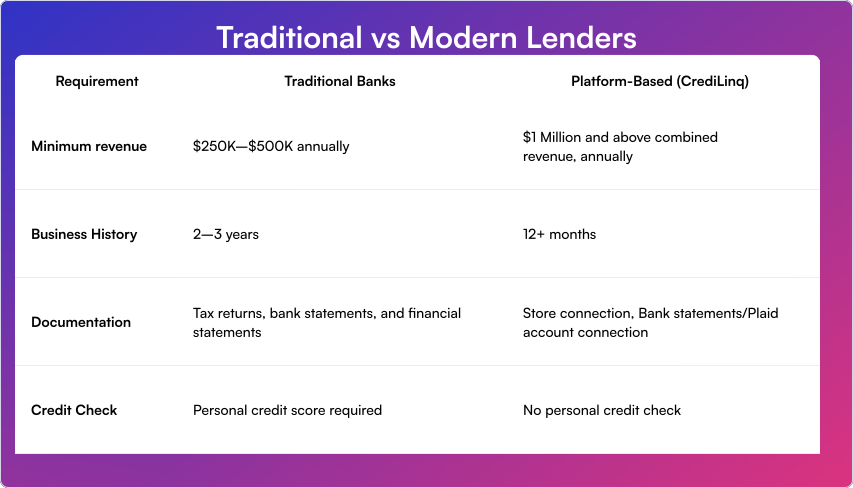
Most sellers assume they do not qualify for funding, especially if traditional banks have rejected them in the past. But modern eCommerce lenders use completely different criteria than banks do.
Where banks require a lot of manual paperwork and documentation, platform lenders like CrediLinq can qualify sellers seamlessly through connecting store performance data and bank statements.

Platform-based underwriting changes everything
CrediLinq connects directly to your online stores to analyze real business data—your sales performance, payment history, and return patterns. This gives a clear, up-to-date view of how your business is performing right now, not how it performed years ago.
Because CrediLinq bases its decisions on live data, you do not need to provide personal credit scores or tax returns.* The process is faster, simpler, and fairer—credit built on how your business truly performs today, not on outdated paperwork.
*Additional documents may be requested if necessary.
Step 6: Compare your options side by side
Once you have confirmed eligibility, the final step is comparison. Now that you understand your situation, timeline, cost tolerance, and eligibility constraints, here is how the main eCommerce funding options stack up: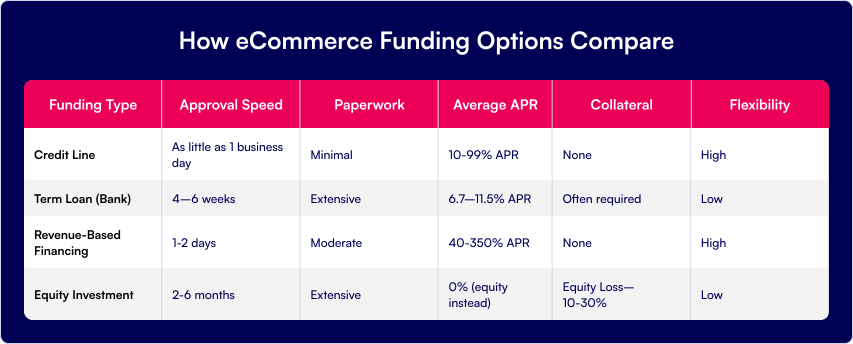
No option is perfect for everyone, but you can see which one fits your constraints.
- If you need money fast, collateral is unavailable, and you want to keep full control, a credit line like CrediLinq is the right fit.
- If you have time and want the lowest possible interest rate, a bank loan is worth the wait and paperwork.
- If your revenue is highly seasonal and you want repayment to flex with your sales, revenue-based financing is a better option.
Read more about each of these eCommerce financing options in our detailed guide.
The Right Capital, When You Need It
Most sellers skip straight to “who will approve me?” and end up with expensive mismatches—term loans when they need flexibility, merchant cash advances when they could qualify for better rates, or equity rounds when simple working capital would work fine.
Modern eCommerce moves too quickly for traditional underwriting timelines. You should not have to provide years of tax returns or wait weeks for a decision when your sales data already tells the story of your business performance.
That is why CrediLinq built a faster, data-driven way to access working capital—so you can restock, advertise, or expand exactly when opportunities appear.
Connect your store and see how much you qualify for—no paperwork, no waiting. Approval in as little as one business day.

Final Takeaways
- Know your numbers before you borrow. Understand your current cash position, sales rhythm, and timing gaps. Most funding mistakes happen when you skip this step.
- Choose funding that fits the goal, not just the amount. Short-term restocks and long-term scaling require different structures. Define the purpose first, and the amount follows.
- Balance speed, cost, and control. Platform-based lenders can approve faster with less paperwork, but always compare total cost and repayment flexibility.
- Use your data as leverage. Your store performance is your strongest asset. It helps you qualify faster and secure funding on your terms.