




Overview
|
Why This Matters
|
While equity financing can inject capital into an eCommerce business, that capital is often quickly absorbed into inventory, advertising, supplier payments, and marketplace operations. At the same time, marketplaces like Amazon make sellers compete based on inventory availability, pricing consistency, fulfillment speed, and advertising performance.
As a result, many eCommerce businesses are not necessarily looking for another equity round, but rather non-dilutive funding to support ongoing cash flow needs. In fact, 82% of banks report that small lines of credit are primarily used for working capital, inventory purchases, or accounts receivable funding.
This is where non-dilutive funding becomes particularly relevant. Instead of giving up ownership to raise capital, businesses can access flexible funding designed to support inventory cycles, marketing spend, and day-to-day operations.
So, in this article, we will explore non-dilutive funding options for eCommerce businesses.
What is Non-Dilutive Funding?
Non-dilutive funding is any form of financing that allows businesses to access capital without giving up ownership or equity in the company. Rather than raising funds through equity investment, businesses obtain capital against assets or indicators such as revenue, invoices, inventory, creditworthiness, or projected sales performance.
For eCommerce businesses, non-dilutive funding is commonly used for market and marketplace expansion, product expansion, inventory, advertising, supplier payments, and working capital requirements while retaining ownership of the business.
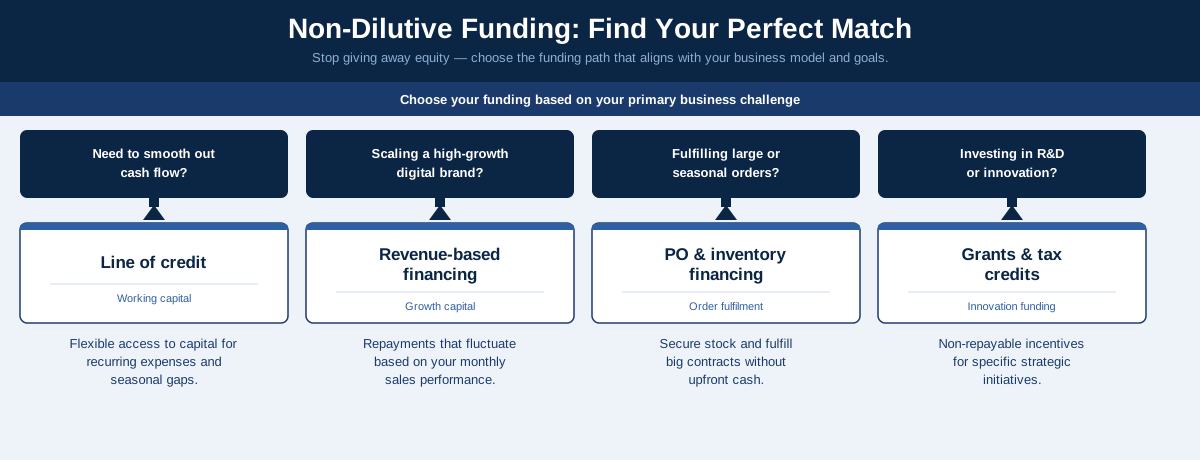
Common non-dilutive funding options include:
- Line of credit
- Revenue-based financing
- Purchase order financing
- Inventory financing
- Traditional debt financing
- Tax credits
- Crowdfunding
- Grants
Line of Credit
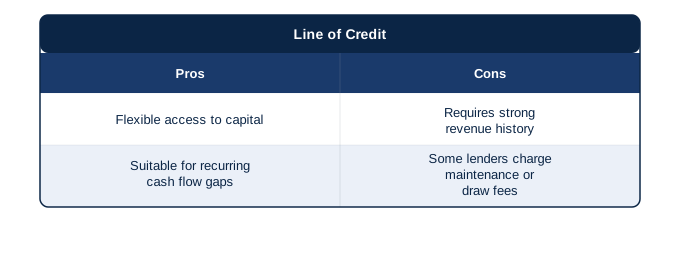
A line of credit provides access to a pre-approved pool of capital that can be drawn as needed and repaid over time. Unlike traditional loans, businesses only pay for the amount they use, making it suitable for recurring operational expenses and cash flow gaps.
Ideal for: Inventory restocks, advertising spend, supplier payments, and seasonal working capital needs.
Typical eligibility: Established business revenue, credit history, and bank or marketplace transaction history.
Typical cost: Interest rates, draw fees, maintenance fees, and occasional origination charges.
Revenue-Based Financing (RBF)
Revenue-based financing provides capital in exchange for a percentage of future revenue until a fixed repayment amount is met. Repayments fluctuate with sales performance, making it popular among eCommerce and SaaS businesses with variable revenue cycles.
Ideal for: Fast-growing eCommerce brands, seasonal sellers, and businesses with strong marketplace or DTC revenue.
Typical eligibility: Consistent monthly revenue, payment processing history, and sales performance.
Typical cost: Factor rates and fixed repayment caps.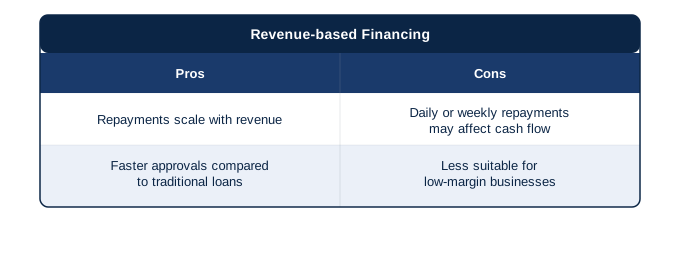
Purchase Order Financing
Purchase order financing enables businesses to secure funding against confirmed customer orders or purchase orders. The financing provider typically pays suppliers directly, allowing businesses to fulfill large orders without exhausting existing working capital.
Ideal for: Wholesalers and importers managing large inventory orders.
Typical eligibility: Verified purchase orders, reliable suppliers, customer creditworthiness, and proven fulfillment capability.
Typical cost: Factor fees, supplier payment charges, and transaction fees.
Inventory Financing
Inventory financing enables businesses to raise capital against existing or incoming inventory. Funding is commonly used to prepare for seasonal demand spikes or large restocking cycles.
Ideal for: Inventory-heavy eCommerce businesses with predictable sales cycles.
Typical eligibility: Inventory valuation, sales velocity, and operational history.
Typical cost: Interest charges, collateral valuation fees, and storage-related assessments.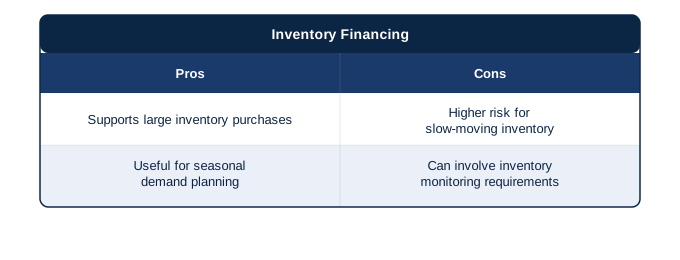
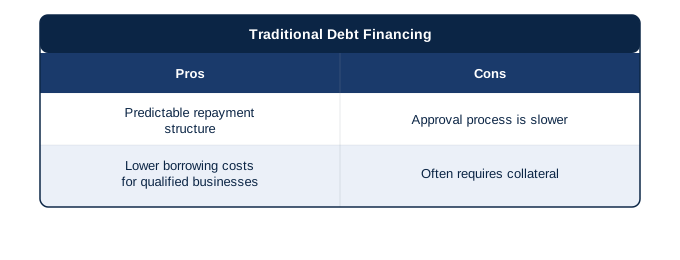
Traditional Debt Financing
Traditional debt financing includes business loans issued by banks or financial institutions with fixed repayment schedules and interest rates.
Ideal for: Established businesses seeking structured long-term financing.
Typical eligibility: Strong credit profile, financial statements, collateral, and operational history.
Typical cost: Interest rates, origination fees, and repayment-related charges.
Tax Credits
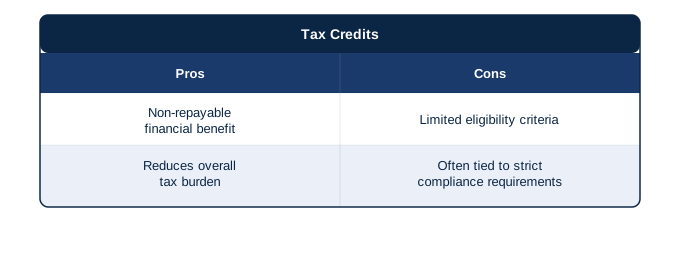
Tax credits are government-backed financial incentives that reduce a business’s overall tax liability. Unlike loans or financing facilities, tax credits do not require repayment and are typically offered to encourage activities such as research and development, sustainability initiatives, exports, hiring, or regional business expansion.
Ideal for: Businesses investing in innovation, sustainability, exports, technology development, or other qualifying initiatives.
Typical eligibility: Compliance with specific tax, operational, or industry requirements.
Typical cost: Application preparation, accounting support, legal consultation, and compliance documentation costs.
Crowdfunding
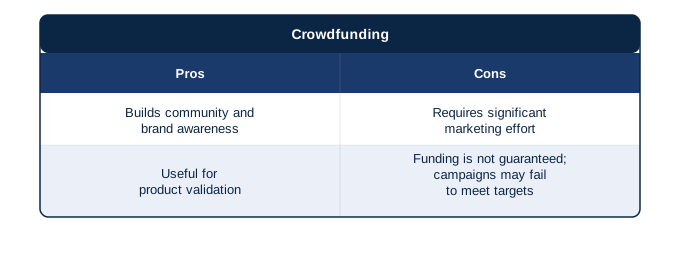
Crowdfunding allows businesses to raise capital from a large group of individuals through online platforms. Depending on the model, businesses may offer rewards, early product access, or debt repayments instead of equity.
Ideal for: Consumer brands, product launches, and community-driven businesses.
Typical eligibility: Marketable product concept, audience reach, and campaign readiness.
Typical cost: Platform fees, marketing costs, and campaign management expenses.
Grants
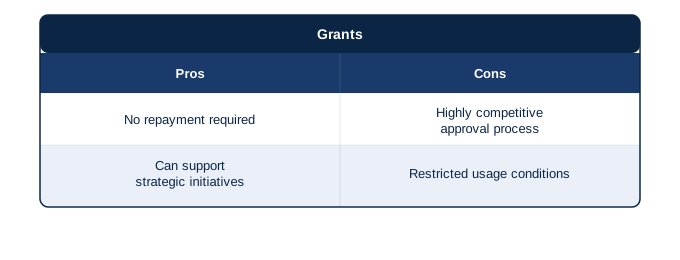
Grants provide non-repayable funding offered by governments, institutions, or organizations to support specific business activities or sectors.
Ideal for: Innovation-led, sustainability-focused, export-oriented, or qualifying small businesses.
Typical eligibility: Industry alignment, compliance documentation, and application-based qualification.
Typical cost: Application preparation, consulting, and reporting-related costs.
Pros and Cons of Non-Dilutive Funding
Not all non-dilutive funding options are designed for the speed and flexibility that eCommerce businesses require. While these funding models help preserve ownership, they can still involve rigid underwriting, hidden fees, collateral requirements, or restrictive repayment structures.
Pros of Non-Dilutive Funding
- No equity dilution: Businesses retain full ownership and decision-making control.
- Faster access to capital: Many non-dilutive funding providers offer faster approvals compared to traditional equity or bank financing processes.
- Flexible usage of funds: Capital can typically be used across inventory, advertising, supplier payments, expansion, and operational working capital requirements.
- Operationally aligned financing: Repayment structures are designed around business revenue cycles and recurring operational cash flow needs.
- Supports short-term growth needs: Useful for managing seasonal demand spikes, inventory restocking, marketplace expansion, and payout timing gaps without long fundraising cycles.
Cons of Non-Dilutive Funding
- Strict revenue qualification requirements: Many lenders require strong historical revenue performance or extensive operating history before approving financing.
- Hidden or layered fees: Some financing options include origination fees, maintenance charges, draw fees, processing costs, or early repayment penalties.
- Collateral requirements: Many lenders still rely on physical collateral or personal guarantees, which can be difficult for asset-light eCommerce businesses.
How CrediLinq Makes Non-Dilutive Funding Accessible for eCommerce Businesses
For many eCommerce businesses, the issue is not whether non-dilutive funding exists, but whether it is actually built for the pace of marketplace operations. Traditional financing models struggle to accommodate businesses operating through online storefronts, third-party logistics providers, and fast-moving inventory cycles.
CrediLinq approaches working capital differently by structuring financing around eCommerce performance and operational flexibility instead of conventional lending limitations.
- Access up to $2 million in working capital through platform-based underwriting connected directly to marketplace and sales data.
- No collateral or equity requirements, making financing accessible for asset-light eCommerce businesses.
- Approvals in as little as 1 business day, helping businesses respond faster to inventory, advertising, or expansion needs.
- Pay only for the amount used with transparent monthly pricing and no hidden fees or prepayment penalties.
- Flexible usage across inventory, ad spend, supplier payments, product launches, and marketplace expansion.
Instead of functioning like a traditional business loan, CrediLinq makes non-dilutive funding flexible. All you need is a 12-month sales history with $30K+ in monthly revenue across marketplaces (Amazon, TikTok Shop, Shopify, Walmart, eBay, Lazada, Shopee), and connect with a Plaid account (or provide bank statements) to get funded.
From there, withdraw the needful and repay flexibly with fees as low as 1.5% per month of the amount withdrawn, to be paid in 3-6 months in biweekly installments.

Funding Does Not Have to Be a Trade-Off
For eCommerce businesses, financing has traditionally come with compromise.
Equity funding provides access to growth capital, but at the expense of ownership, control, and lengthy fundraising timelines. Traditional non-dilutive financing, on the other hand, preserves equity while introducing rigid qualification requirements, collateral demands, and limited operational flexibility.
CrediLinq is built to remove that trade-off.
With platform-based underwriting, eCommerce businesses can access up to $2 million in working capital without pledging collateral or giving up equity. Funds can be used across inventory, advertising, supplier payments, and marketplace expansion, while flexible repayment structures better align with eCommerce cash flow cycles.
The result is financing that combines accessibility, flexibility, and ownership retention in a single working capital solution.
Key Takeaways
|
Frequently Asked Questions
What is non-dilutive funding?
Non-dilutive funding helps eCommerce businesses access working capital without giving up equity or ownership. It is commonly used for inventory, advertising, supplier payments, and marketplace expansion.
Is alternative lending better for eCommerce businesses?
Alternative lending is better suited for eCommerce businesses because it evaluates marketplace performance and sales data instead of relying heavily on traditional collateral.
What is eCommerce growth capital?
eCommerce growth capital refers to funding used for inventory restocking, ad spend, supplier payments, product launches, and marketplace expansion.
What is the minimum revenue required to qualify for non-dilutive funding?
Revenue requirements vary by lender. Many eCommerce funding providers evaluate sales consistency, operational history, and marketplace performance before approving financing.
How fast can marketplace sellers access funds?
Traditional financing can take weeks. eCommerce-focused lenders like CrediLinq can provide approvals in as little as 1 business day.
Does non-dilutive funding affect Amazon Buy Box metrics?
No. However, access to working capital can help sellers maintain inventory levels, pricing consistency, and fulfillment performance that influence Buy Box visibility.
Will using non-dilutive funding affect future VC fundraising?
Typically, no. Non-dilutive funding allows businesses to access capital without immediate ownership dilution, helping preserve equity for future fundraising rounds.
How is CrediLinq different from revenue-based financing providers?
CrediLinq offers a flexible credit line with platform-based underwriting, transparent pricing, no collateral requirements, and funding designed for eCommerce cash flow cycles.