


Key takeaways:
- Amazon payouts typically follow a bi-weekly cycle, with a 7-day hold after order delivery to manage returns and disputes.
- Delays are common, especially for new sellers or accounts with refund issues, disputes, or poor account health.
- Express Payout is available for some sellers, offering access to funds within 24 hours — but it’s region and account-dependent.
- Payout disruptions affect restocking, ad spend, and overall cash flow, making it harder to grow during peak demand.
- Smart planning includes monitoring disbursement trends, negotiating with suppliers, and maintaining a buffer to bridge gaps.
- Funding solutions like CrediLinq help sellers access working capital faster, without waiting on Amazon’s schedule.
If you’re selling on Amazon, making a sale is just the first step. Getting your money in time to reinvest is what keeps the business moving.
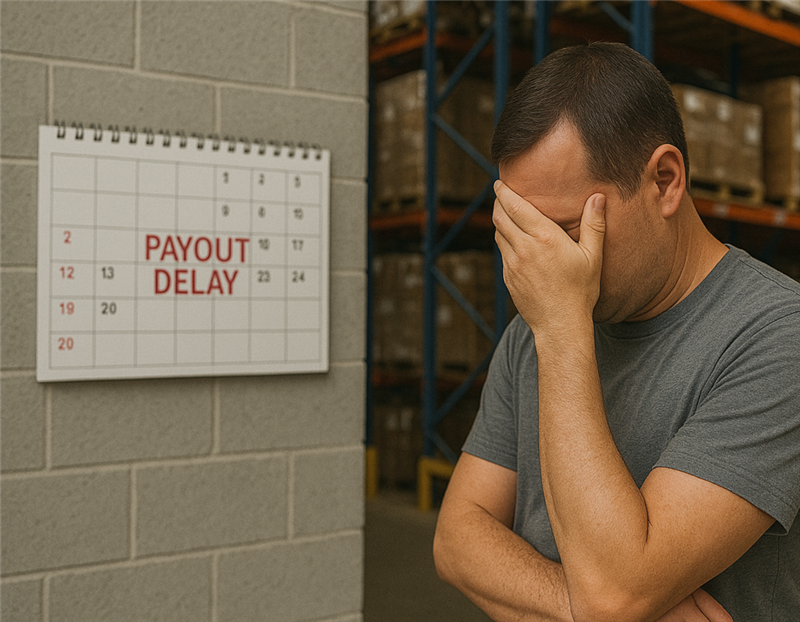
Many sellers wait days, sometimes weeks, for their payouts to land. That delay makes it harder to reorder stock, fund ads, or handle rising logistics costs. And with no fixed rule across all accounts, it’s tough to plan.
In this guide, we’ll walk through how Amazon seller payouts work, why funds are often held, and what delays actually mean for your operations. You’ll also find practical ways to stay on top of your cash cycle and explore options like CrediLinq that help you move faster, even when Amazon moves slowly.
How the Amazon Seller Payout Schedule Works
Amazon does not pay sellers right away after a sale. Instead, there’s a process designed to manage returns, disputes, and platform fees before disbursing funds.
Here’s how the standard payout flow works:
1. Payout frequency depends on your seller type
- Professional sellers are paid every 14 days.
- Individual sellers are typically paid every 7 days.
But these are not guaranteed transfer dates. Amazon begins processing your payout 7 days after the latest estimated delivery date of the order, not the order date itself.
2. What triggers a longer hold?
- New seller accounts with no sales history
- Higher refund or dispute rates
- Poor performance metrics (late shipments, buyer complaints)
- Sudden spikes in order volume
3. Can sellers get paid daily?
Yes, but only a small group of sellers have access to Amazon’s Daily Express Payouts. It’s invitation-only and depends on your account standing and country. If eligible, funds are released within 24 hours of becoming available, including weekends.
Understanding this flow is key if you rely on your payouts to reinvest in ads or inventory. A delay of even a few days could mean missing out on high-demand windows.
Why Amazon Payouts Are Often Delayed
Even if your sales look strong, Amazon might hold your earnings for a while. Several behind-the-scenes checks influence when your money actually lands.
Below are some of the major reasons:
Account performance matters
Sellers with solid ratings and on-time shipping tend to see smoother payouts. But if your store shows a spike in cancellations or customer complaints, Amazon slows things down to review activity.
Amazon holds a reserve
Amazon holds a portion of your balance in a rolling reserve to cover potential returns, chargebacks, and A-to-Z claims. This reserve is often based on recent order volume and risk level. For many sellers, the rolling reserve creates an ongoing delay.
Refunds affect timing
If many buyers are returning products, Amazon holds back more funds. This helps them manage refund obligations and can delay what’s available to you.
The more consistent your operations, the easier it becomes to predict your payout timeline.
Real Impact of Delayed Payouts
Delayed Amazon payouts don’t just affect your bank balance—they directly slow your store’s momentum.
When you don’t get paid on time, restocking becomes harder. Imagine that one bestseller that’s flying off the shelves? You might not have the funds to reorder it in time.
Marketing takes a hit, too. Many sellers use their payout cycle to time ad spending. But when funds are held up, ad budgets shrink, and sales can slow down just when you were gaining traction.
It also makes forecasting harder. If you don’t know when money’s coming in, planning for your next big campaign or inventory shipment becomes guesswork.
Over time, this kind of cash gap creates stress and limits growth. It’s one of the most common challenges for sellers, no matter how experienced they are.
How to Survive Between Amazon Payouts
Waiting on Amazon payouts doesn’t mean your business has to slow down. With a few smart habits, you can keep things moving even during tight weeks.
1. Build a cash buffer. As part of good cash flow management, set aside a small portion of each payout during peak months. This gives you breathing room when disbursements are delayed.
2. Monitor payout patterns. Use Amazon’s payout reports to understand when funds are actually hitting your account. Over time, you’ll notice trends and be able to plan better.
3. Talk to your suppliers. If you’ve built a good relationship, ask for extended payment terms or partial deposits. This helps you hold onto cash longer.
4. Use your credit cards carefully. When timing it right, Amazon financing options can cover short-term gaps. Just make sure you’re tracking repayment closely to avoid piling up interest.
5. Don’t rely on Amazon alone. If most of your cash comes from one marketplace, delays will hurt more. Explore other sales channels to spread the risk.
How CrediLinq Helps Sellers Facing Payout Gaps
Amazon’s payout system works on their timeline, not yours.
That delay causes problems when you need to move fast. If a big campaign is around the corner or inventory is running low, waiting on disbursements could cost you growth.
Here’s how CrediLinq solves that problem for Amazon sellers:
1. Not tied to Amazon’s payout schedule
With Amazon, even if you’re making steady sales, there’s usually a 7–14 day hold before your money is released. CrediLinq removes that waiting game.
Your funding is based on your store’s performance, not when Amazon decides to release payments. That means you can stock up, ship out, or ramp up ads without delay.
2. Fast approvals and access to funds
CrediLinq is not here to slow you down. Most eligible sellers get approval within 24 hours.
No paperwork marathons, no calls with bank managers. Just plug in your store, verify your sales, and get the capital you need to keep your store running smoothly.
3. Works across multiple marketplaces
If you’re selling on TikTok Shop, Shopify, eBay, Lazada, or Shopee alongside Amazon, you’ll need a funding solution that sees the full picture.
CrediLinq isn’t restricted to one platform. Your funding reflects your total business, not just what you’ve earned on Amazon. That gives you a bigger limit and more flexibility.
4. Clear, upfront terms
There are no hidden fees or fine-print surprises. Everything from interest rates to repayment timelines is shown before you accept the offer. Repayment is flexible too, with options built around your sales rhythm.
5. Built for fast-moving sellers
Whether you’re launching a new product or prepping for a high-traffic sales event, timing is everything. CrediLinq helps you stay ahead by making capital available when you need it, not after you’ve missed the opportunity.
Get funded to move faster, without waiting for Amazon payouts.
Frequently Asked Questions
1. How long does it take to get paid from Amazon?
Amazon typically pays sellers every 14 days. Once a payout is initiated, it may take 3–5 business days to reflect in your bank account, depending on your bank and location.
2. Why is my Amazon payout delayed?
Payouts are often delayed due to reserve holds. Amazon sets aside a portion of your balance to cover potential refunds, chargebacks, or disputes. Delays can also happen if your account health drops or if there are policy reviews in progress.
3. Can I change my Amazon payout schedule to daily?
Amazon offers daily payouts through the Express Payout feature, but it’s not available to all sellers. Eligibility depends on your region, account performance, and bank compatibility.
4. What is Amazon’s reserve balance?
This is the amount Amazon holds back from your earnings to cover returns, customer disputes, and other risks. It usually resets every 7–14 days and varies based on your account history and risk profile.
5. What can I do if my Amazon payout is on hold?
Check your account health and notifications in Seller Central. Fix any flagged issues, review the Payments section for details, and contact support if there’s no clear reason. Meanwhile, tools like CrediLinq can help you bridge the gap with fast working capital.