




Overview
- Cash flow is a major challenge for Shopify sellers due to delayed payouts and high operational demands.
- Traditional bank loans are slow and rigid; modern financing options offer faster, flexible alternatives.
- Each funding option has its strengths: Term loans for big inventory or marketing requirements, credit lines for flexible cash flow, revenue-based financing for sales-linked repayment, payout accelerators for instant access, and purchase order financing for supplier payments.
- Key factors to consider before choosing a lender: access, funding limits, approval speed, repayment flexibility, platform compatibility, fee transparency, use of funds, equity impact, and geographic or currency support.
Why This Matters to You
- Avoid Cash Crunches
With the right lender, you bridge gaps between sales and expenses without interrupting operations. - Seize Opportunities
Quick approval and flexible funding let you act on supplier discounts, marketing campaigns, and seasonal spikes. - Maintain Control
Debt-based funding keeps ownership, avoids equity dilution, and aligns repayments with your cash flow.
Running a Shopify store is no small feat. You drive 100% of the traffic yourself. You juggle inventory, customer experience, and rising acquisition costs. And just when you need cash to move faster, payouts can take longer than expected.
That makes cash flow one of the toughest parts of running your store. While Shopify has built a strong ecosystem for D2C brands, its capital program is still invite-only. Which means most sellers need to look at other ways to get money in the door when it matters most.
In this blog, we will walk through the different ways Shopify sellers can fund their growth, what to look out for when choosing a loan, and how today’s lenders compare.
Shopify Store Financing Options: How to Fund Your Growth
Traditional funding methods—like bank loans or reinvesting profits—are slow and restrictive, leaving you waiting weeks for cash. Here are the top 5 ways to fund your Shopify store quickly, so you can cover inventory, marketing, and operations without missing growth opportunities.
1. Term Loans
Best for: Those planning big inventory buys ahead of seasonal sales (e.g., BFCM), or making a major investment in marketing.
A term loan gives you a fixed amount upfront, which you repay over a set period, usually in monthly installments. You pay principal plus interest regardless of whether your sales spike or dip. It is predictable and ideal when you know exactly what you need to spend.
General Eligibility:
- Store live for at least 6–12 months with stable sales volume
- Active Shopify Payments or connected bank account
- Basic business verification
Fees and Repayment
- Cost: Typically 14% to 99% APR, sometimes with origination fees, late payment penalties, and prepayment charges.
- Repayment: Fixed monthly installments over a 6–36 month term

2. Credit Line
Best for: Covering irregular expenses like ad campaigns, restocks, or short-term working capital without committing to a lump sum.
A credit line works like a Shopify-friendly business credit card. You are approved for a limit, but only pay interest on what you draw. This makes it ideal for bridging cash flow gaps—like running ads today while waiting for payouts next week.
General Eligibility
- 6–12 months of operational history
- Regular sales and consistent revenue
- Connected Shopify Payments or business bank account/Plaid account
- Registered business entity, basic verification
Fees and Repayment Structure
- Cost: Interest rates usually 10% to 99% APR; may include annual fee, maintenance fees, and drawdown fee
- Repayment: Flexible—repay used funds over a fixed schedule, often monthly, while unused funds remain available

3. Revenue-Based Financing (RBF)
Best for: Brands with unpredictable sales cycles who want payments that flex with revenue.
RBF is repaid as a percentage of daily/weekly Shopify sales. When revenue is high, you repay more; when sales dip, repayment shrinks. There are no fixed monthly installments, so it adjusts naturally to your cash flow.
General Eligibility
- Minimum 6 months operational history
- Active Shopify storefront linked to payouts
- Verified business identity
Fees and Repayment Structure
- Cost: Typically 40% to 350% APR (high if sales are slow)
- Repayment: Deducted as a fixed percentage of daily or weekly sales until total repayment is completed

4. Payout Accelerators
Best for: Getting cash from Shopify payouts immediately instead of waiting 2–7 days.
Accelerators advance your already-earned sales revenue right away. When Shopify releases your payout, the lender collects their cut. Unlike loans or RBF, repayment is not tied to future sales—just to the pending payout.
General Eligibility
- Active Shopify store or marketplace account
- Minimum sales thresholds (varies by provider)
- Verified bank account linked to Shopify Payments
Fees and Repayment Structure
- Cost: Typically, for payment accelerators like Storfund, a flat 0.1%–0.2% of the funded net sales applies, with no setup or subscription costs. Some providers may charge additional processing fees.
- Repayment: Automatically deducted from your next payout(s) until the advance plus fees are cleared.

5. Invoice or Purchase Order Financing
Best for: Covering large supplier payments for bulk inventory before sales revenue comes in.
PO financing provides funds upfront to pay suppliers. You use the inventory to sell directly to your customers, and once you have sold the stock, you repay along with the fees.
General Eligibility
- Active Shopify store with at least 6–12 months of operational history
- Verified supplier invoice or purchase order
- Stable monthly sales history
Fees and Repayment Structure
- Cost: PO financing typically costs 1% to 6% of the financed amount per 30 days, with possible additional fees for processing, verification, wire transfers, underwriting, and sometimes admin fees.
- Repayment: With D2C-focused PO financing, you repay as each unit of inventory sells, or by the agreed term if stock remains.

What to Consider Before Taking a Shopify Business Loan

Not all Shopify business loans work the same way. Before committing, it helps to look beyond just the loan amount.
Here is a list of key factors to compare when choosing the right lender for your business:
-
Access – Is the funding open to all eligible sellers, or limited to invite-only programs?
Some programs, like Shopify Capital, are invite-only. You cannot apply when you need funds—you have to wait until the platform decides you qualify.
Better choice: Choose lenders where you can apply directly, check eligibility instantly, and access funds on demand.
-
Funding Limit – Does the lender scale with your business size, or cap you too early?
Some lenders cap at a low limit that never grows, forcing you to switch lenders as you expand.
Better choice: Pick lenders whose funding limits increase alongside your sales growth, so your access to capital grows with your business.
-
Use of Funds – Can you use the loan broadly (inventory, marketing, expansion), or only for limited purposes?
Some loans restrict usage—like PO financing that only covers supplier payments—or route funds into a marketplace wallet, which limits flexibility.
Better choice: Choose loans that deposit funds into your bank account, so you can use them across inventory, marketing, or expansion as you see fit.
-
Equity Impact – Does it involve giving up equity in your business?
Equity-based funding means giving up ownership or profit share, which reduces long-term control.
Better choice: Look for modern e-commerce business loans that rely on your sales data, so you get capital without giving away equity.
-
Approval Speed – How quickly can you get funds once you apply?
Traditional banks take weeks just to provide an offer, which means you miss supplier discounts or seasonal sales peaks.
Better choice: Go for lenders that approve within 1–2 business days, or even minutes, so you can seize opportunities right away.
-
Platform Compatibility – Does the lender connect with multiple e-commerce platforms, or only Shopify?
Shopify Capital only supports Shopify. Many others cover only Amazon or Shopify, leaving out platforms like eBay, TikTok Shop, Lazada or Shopee. This limits your growth across regions.
Better choice: Choose a lender with multi-platform integrations to expand wherever your customers are.
-
Fee Structure – Are fees transparent?
APR often looks low on paper, but hidden costs like origination fees, account charges, or early repayment penalties increase the actual cost.
Better choice: Choose lenders with flat, upfront fees that let you calculate the true cost of borrowing before you commit.
-
Repayment Flexibility – Are repayments fixed daily deductions, or can they adjust to your cash flow?
Fixed repayments drain cash when sales dip. Sales-based loans stretch for months if sales are slow and often include lock-in periods.
Better choice: Seek flexible repayment terms that let you pay more when business is strong, and ease off when needed, without prepayment penalties or lock-ins.
-
Geographic and Currency Support – Does the lender support sellers across regions and currencies?
Many lenders focus only on the United States or Europe and only support USD or EUR, creating roadblocks when you expand globally.
Better choice: Select a lender that supports multiple regions and currencies, saving you from conversion costs and financing gaps as you scale internationally.
Best Shopify Business Loan Providers in 2025
Here is a list of top Shopify business loan providers to help you weigh your options.
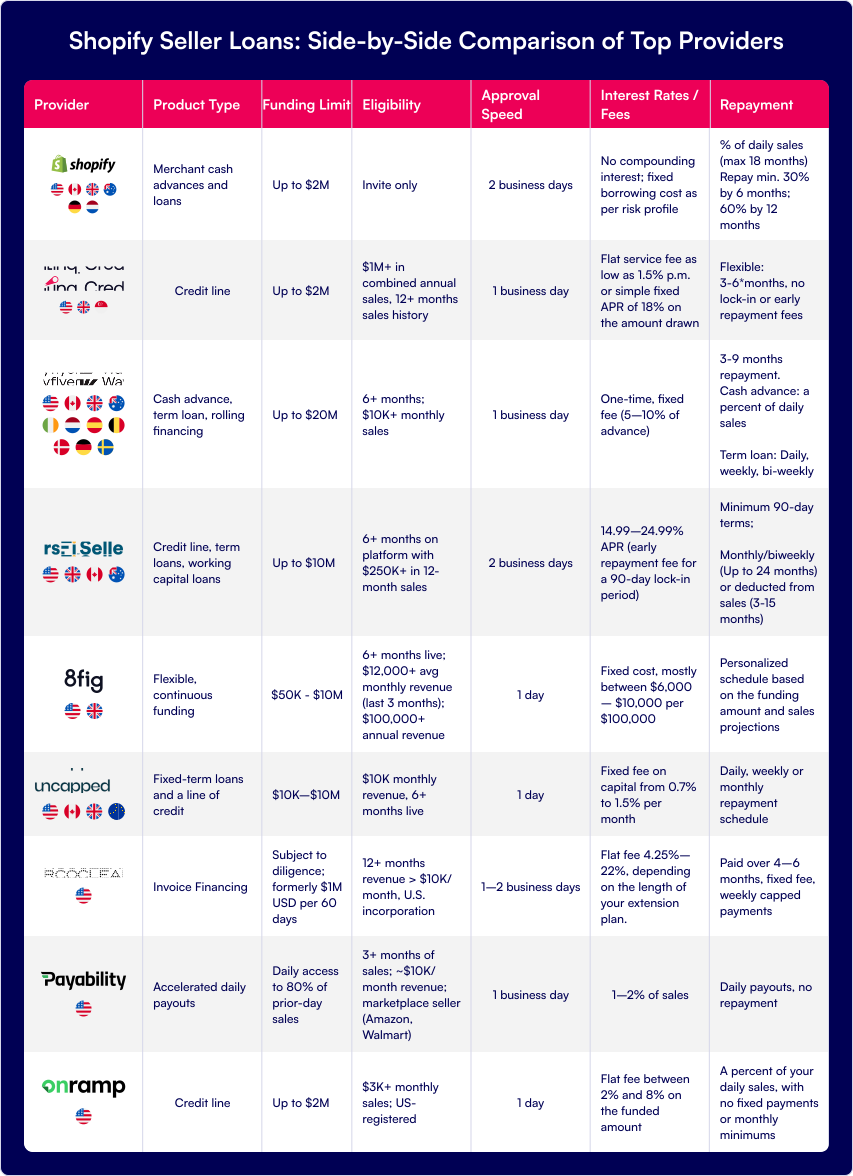
Looking at the comparison, it is clear that every Shopify lender has its strengths but also trade-offs.
Shopify Capital is fast, but invite-only and limited to select markets. Wayflyer handles large funding amounts, yet locks you into fixed contracts. SellersFi and 8Fig offer flexible terms, but are restricted by region or repayment structure. Iwoca and Uncapped primarily serve Europe, leaving sellers outside the West underserved. Payability Instant Access gives US Shopify sellers instant access to earned revenue, but its Shopify support does not extend internationally.
CrediLinq addresses these gaps:
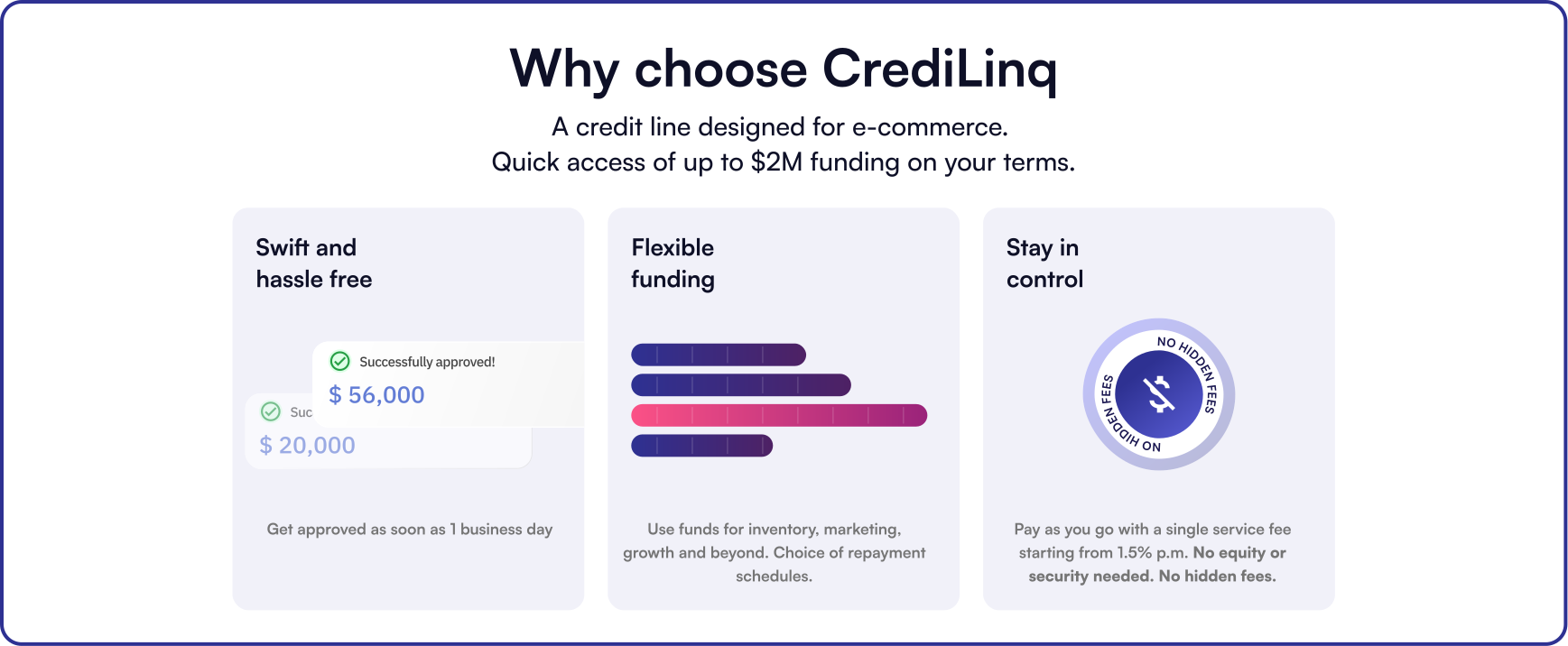
- Access – Apply directly with 12+ months of sales history and $1M in annual revenue. Must be a registered business (not individual sellers or sole proprietors).
- Use of Funds – Use funds freely, with money landing directly in your bank account to spend on expansion, product launches, inventory, or marketing.
- Equity Impact – Keep full ownership of your business, since funding is debt-based and does not take equity.
- Funding Limit – Scale your funding as you grow, ensuring capital grows with your business.
- Platform Compatibility – Integrate seamlessly with Amazon, TikTok Shop, Shopify, eBay, Lazada, Shopee, and more to fund all selling channels.
- Approval Speed – Access funds as fast as one business day to capitalize on seasonal peaks, supplier discounts, or marketing opportunities.
- Fee Structure – Pay a flat monthly fee as low as 1.5% or a simple fixed annual percentage rate of 18% on withdrawn amounts, with no hidden charges, lock-ins, or early repayment penalties.
- Repayment Flexibility – Pay flexibly in biweekly installments with no bullet payments, early repayment fees or penalties.
- Geographic and Currency Support – Expand globally with support in the United States, United Kingdom, and Singapore, with funding in USD, GBP, and SGD.
CrediLinq combines the speed of fintech lenders, the flexibility of cash you can use anywhere, and the reach of a truly global platform—giving you capital on terms built for fast-moving ecommerce sellers.

Final Takeaways
- Match Funding Type to Need: Use term loans for large, planned expenses; credit lines or RBF for ongoing operational flexibility; accelerators for instant Shopify payouts.
- Check Eligibility and Platform Compatibility: Ensure your store meets the criteria and that the lender integrates with all your sales channels.
- Prioritize Repayment Flexibility: Choose lenders that adjust with your cash flow—no fixed installments or penalties.
- Plan for Growth: Pick funding that scales with your sales and supports your target markets or currencies.